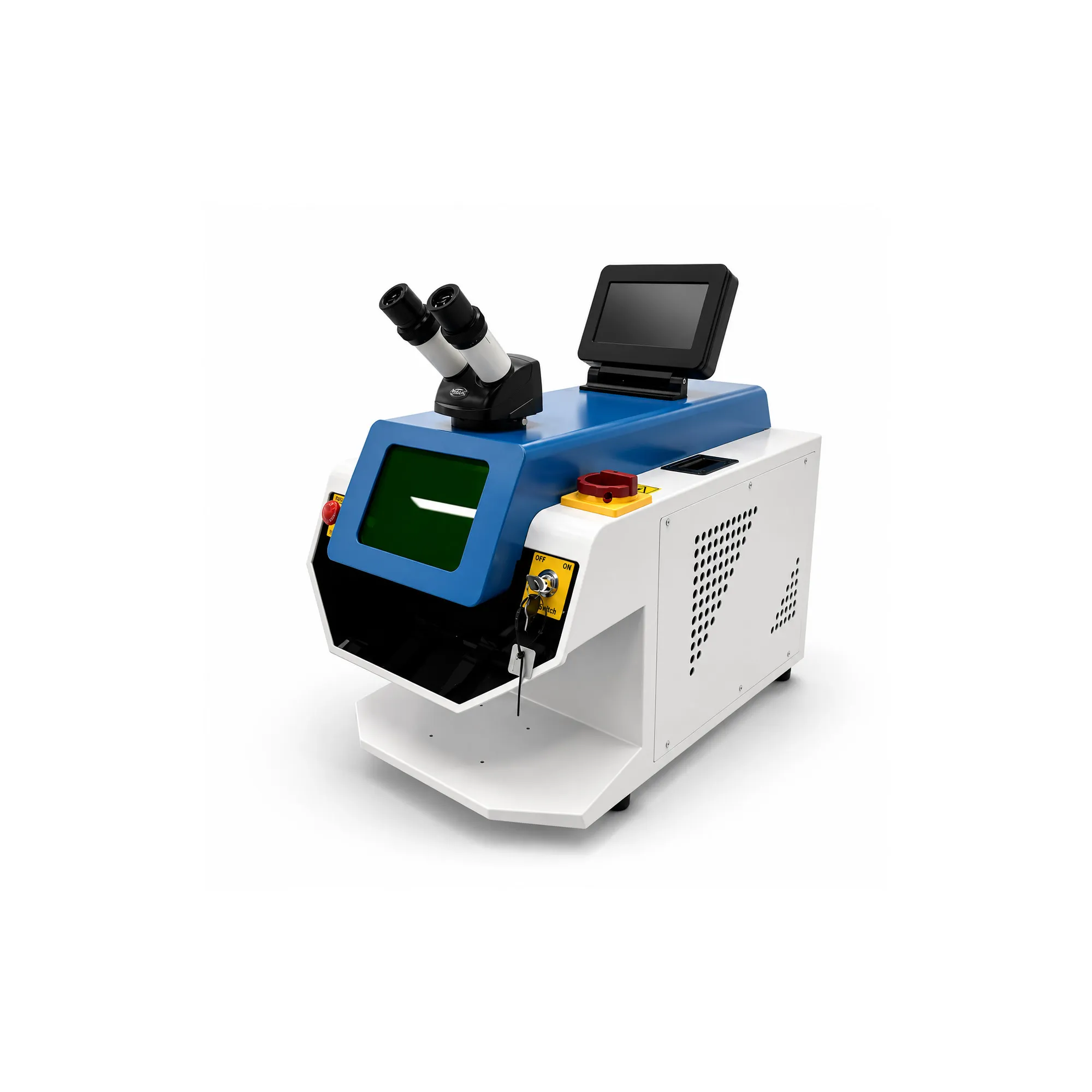
Jewelry Laser Welding
Review fine joining and repair with the material, feature size and required inspection.
Discuss jewelry welding
STR handheld fiber laser welding · Start with the joint and the result you need.
Evaluate STR handheld fiber laser welding around your material grade, actual thickness, joint access and acceptance requirements. Review the source, torch, wire feed, shielding and cooling as one configuration, then prove the result with representative parts before changing the production route.
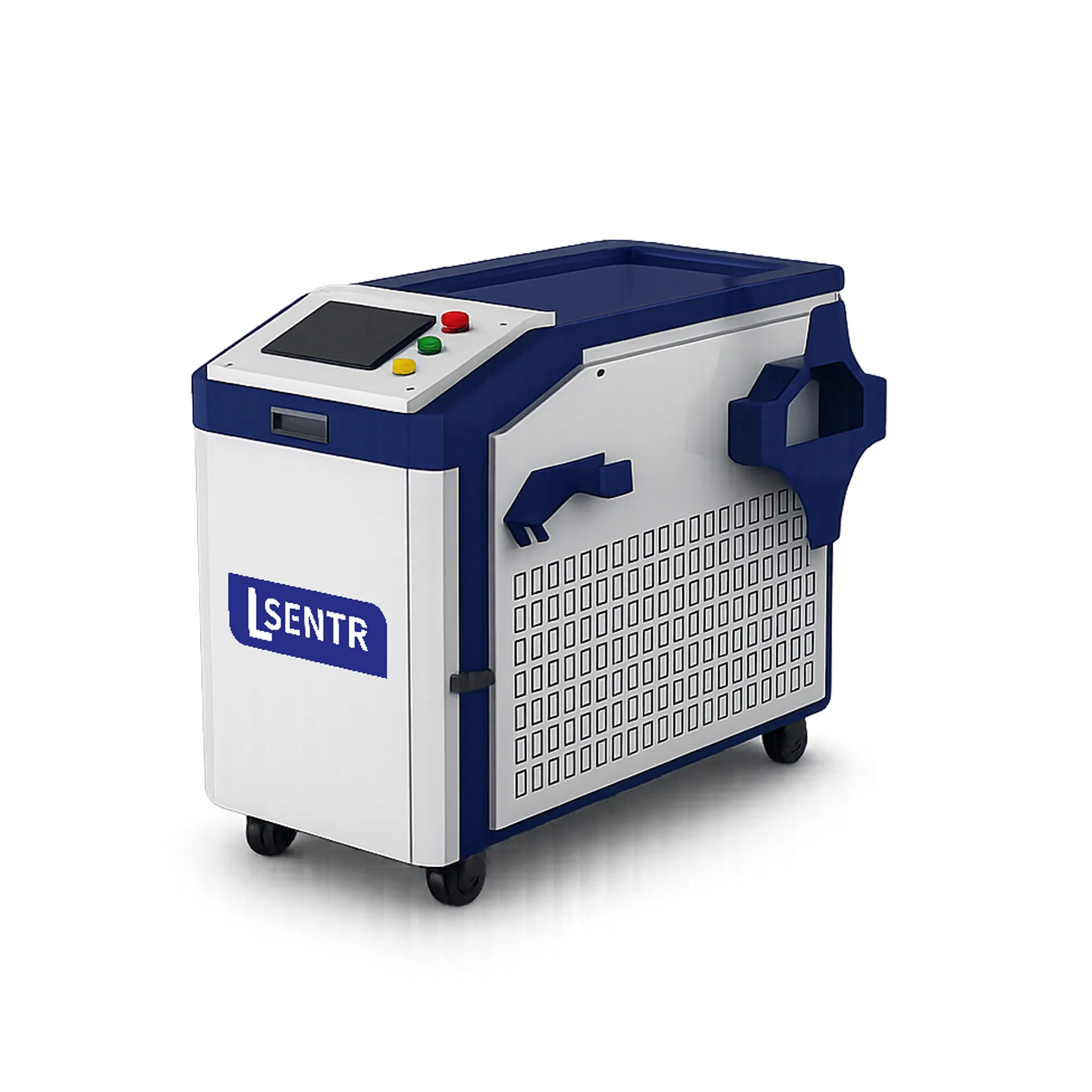
Original STR catalogue cabinet with labeled same-image details. Request the exact torch, feeder, cooling and accessory list for the offered model.
Configure the process around the accepted weld.
Identify both material grades and thicknesses, gap variation, weld length and the required appearance or inspection. Include the next finishing step and production quantity.
Handheld laser welding introduces a different way to deliver energy to a joint, while the operator, fixture, incoming parts and acceptance criteria still shape the result. Start with a defined family of joints and compare it against the current production route.
Review accessible seams, edge preparation, fixturing and cosmetic faces. Check distortion and cleanup on the complete assembly rather than an isolated bead.
Supply the required joint, access and fit-up variation. Tie weld size and inspection requirements to the drawing and intended use.
Include positioning, tack/setup work, handling, inspection and finishing. An attractive seam or a fast torch pass is not a complete production comparison.
Identify material, surface condition and fit-up.
Confirm fixturing, torch reach and repeatability.
Match the offered process to agreed sample results.
Check the joint and its downstream condition.
Request a model-specific technical sheet and itemized scope. Select power and process options from the actual joint trial, not a maximum material-thickness headline.
| Item | Definition required in the offer |
|---|---|
| Model and source | Model/revision, source type and rated output, process modes, duty/ambient conditions and compatible control. |
| Torch and delivery | Torch model, fitted optics/nozzles, delivery cable and usable work area, handling limits and replacement references. |
| Joint and material range | Qualified grade/thickness combinations, joint types, gap/misalignment conditions and measurable weld requirements. |
| Wire feeding | Whether feeder is included, supported filler materials/sizes, guide/drive parts, integration and procedure for changing material. |
| Shielding and cooling | Required shielding/backing arrangements, gas quality/delivery, cooling equipment, utilities and environmental limits. |
| Functions and accessories | Any wobble, cleaning, cutting or other modes itemized with compatible hardware, consumables and limits; confirm what is actually supplied. |
| Workshop and acceptance | Protective arrangements and interfaces, extraction, training, representative trials, inspection records, support and delivery scope. |
STR’s public catalogue identifies handheld fiber laser welding, but its listed power ranges differ between the menu and product card. Numeric power, thickness and speed are therefore left to the exact offered model. Water cooling, feeder and multifunction descriptions also require a matching scope of supply.
Record thickness on both parts, edge preparation, gap, mismatch, access and the required weld. Fit-up consistency and fixturing affect what the proposed process must demonstrate; wire feeding or a wider bead does not automatically qualify an inconsistent joint.
Select a joint to see the application questions. These cross-sections are simplified geometry, not welding instructions, a torch path or a qualified STR joint list.
Provide both thicknesses, the edge condition, gap variation and any mismatch along the seam.
Industry context: LightWELD’s implementation guide emphasizes consistent fit-up and a measured pilot application. This supports trial planning; its equipment capabilities and performance claims are not STR specifications.
| Input | What belongs in the sample review |
|---|---|
| Exact grades and thicknesses | Identify both parts, including mixed thicknesses or dissimilar materials. Discuss metallurgical suitability and required testing rather than assuming all metals join the same way. |
| Surface condition | Document oxide, coating, oil, film and the agreed preparation. Evaluate the delivered production condition and any preparation/finishing time. |
| Fit-up variation | Provide the expected gap and mismatch range and the fixturing used. A demonstration with tightly prepared coupons may not represent variable production parts. |
| Thermal and dimensional result | Check distortion, dimensional change and cosmetic faces on the assembly with the actual sequence and fixture. |
| Service and inspection requirement | Define the intended duty and drawing/contract acceptance criteria, including any joint qualification, leak, corrosion or mechanical testing requirements. |
These are evaluation inputs, not a qualified STR material or thickness list. Reflective, coated, dissimilar or critical-service joints require explicit review of the proposed equipment, process and acceptance plan.
Confirm whether the proposed joint is qualified with filler or without it. If using wire, specify the material, size and feeder/torch compatibility in the actual procedure and supply list.
Review the real gap range and alignment. A filler feeder or oscillating beam option is not evidence that any gap can be bridged or that joint preparation can be omitted.
Agree shielding gas, delivery and any backing requirement with the application trial. Confirm gas equipment and consumables in the quote; the page does not prescribe a universal gas or flow.
Check the supplied torch and cable against corners, inside joints, workpiece size and fixture clearance. Include access and repositioning in the time comparison.
Define acceptable bead/profile, undercut, discoloration, spatter, distortion and dimensional result. Assess the part after the finishing route required by the drawing.
Agree appropriate examination for the joint and duty. Surface appearance does not establish internal fusion, root condition, strength or leak tightness.
Compare samples across the actual fit-up range and repeated parts. Retain machine/configuration, consumable, fixture and approved process records.
Measure required cleanup, grinding, coating or other treatment on accepted parts. Do not assume every application becomes grinding-free or needs no secondary process.
Define the trial jointly around real production material, drawings and acceptance criteria. Keep the offered source, torch, feeder, gas, cooling and fixtures traceable in the record.
| Trial item | Evidence to keep |
|---|---|
| Incoming parts and setup | Grades, thicknesses, joint geometry, surface preparation, fit-up variation, fixture and access. |
| Actual weld result | Identified samples, face/root condition, dimensional measurements and agreed destructive or nondestructive examination as applicable. |
| Joint transitions | Starts/stops, corners, changes in access and regions representative of the difficult production condition. |
| Repeated parts | Consistency across the agreed part run, inspection results and rejects or rework. |
| Complete workload | Preparation, setup, positioning, welding, inspection, finishing, consumable changes and handling measured with common boundaries. |
| Operator and site handoff | Training, approved operating/maintenance documentation, protective arrangements and equipment integration demonstrated before production use. |
The cabinet rendering is not a weld sample, a qualification record or proof of a finished production rate. Ask for identifiable parts and recorded inspection, including any finishing needed after welding.
| Route | Application question | Compare under the same scope |
|---|---|---|
| Handheld laser welding | Does the offered system produce the required joint with the actual access, fit-up and approved process? | Preparation, shielding/filler, operator method, inspection, finishing and workshop integration. |
| Existing TIG or MIG route | Where is current time or cost spent, and which result must be preserved? | Use the same material, drawing, batch and accepted quality. Keep routes that suit other joint conditions in the production plan. |
| Dedicated automated welding | Do volume, repeatability, fixturing and access support a separately engineered system? | Handling, programming, fixtures, process qualification and changeovers; handheld equipment is not an automatic cell. |
| Jewelry or mould repair equipment | Is the task fine repair, localized buildup or another specific joining requirement? | Review the distinct equipment and material/process scope through the STR welding range. |
A faster weld pass is only one component of cost per accepted part. No universal speed multiplier, labor saving, weld-strength improvement or payback is established for the STR catalogue configuration.
Plan the installation with the supplier and a competent laser-safety specialist before use. Obtain the actual machine classification, protective-function documentation and site requirements for the ordered system.
Provide a suitable controlled laser-welding area and appropriate protective arrangements for direct and reflected radiation. Specify access controls, protective equipment and training for the actual system; ordinary arc-welding protection alone does not establish laser suitability.
Review welding fumes, coatings, gas supply and fire precautions with the site assessment. Match extraction and work-area arrangements to the materials and actual process.
Confirm electrical input, cooling/environment, gas quality/delivery, torch cable management and any enclosure/access-control interfaces. Assign equipment and site responsibilities in writing.
Require training, the supplied manual, protective-function checks and approved interruption/recovery procedures. Keep maintenance and service access in the layout; do not infer protection from the visible cabinet buttons.
For industry context, LightWELD’s safety overview treats system protective features, PPE and a laser-safe area as separate elements. Its safeguards are not evidence of the features fitted to an STR machine.
Identify the exact nozzle, protective optics and replacement references in the delivered BOM. Follow the manual for inspection, cleaning and service; do not assume every torch uses the same parts.
For a fitted feeder, keep drive/guide and filler records. Include the approved material-change and maintenance procedure in training.
Follow the actual equipment requirements and service schedule. Record changes or faults that may affect the agreed weld result rather than compensating with unapproved settings.
Retain approved programs, fixtures, consumables, inspection results and configuration versions. Review changes to the joint, material, machine or required service before extending production use.
The offer should list the source, torch, feeder if supplied, cooling, gas accessories, consumables, software/functions, protective equipment/interfaces, training and sample acceptance scope. Identify exclusions and responsibilities for the controlled work area and extraction.
Agree packing, transport, installation/commissioning, manuals, service contacts, spare parts, warranty conditions and delivery schedule. Compare costs using the same preparation, welding, inspection, finishing and rejected/reworked parts. Confirm multifunction claims individually; a welding label does not qualify a separate cleaning or cutting task.
Have a joint drawing and the acceptance requirement?
Prepare a handheld welding reviewSend the exact materials, both thicknesses, joint geometry, fit-up and required result. Confirm a model-specific offer and representative trial; the public STR catalogue ranges are not treated here as a single verified machine specification.
Evaluate defined parts under the same quality and workload boundaries. Joint access, fit-up, material, qualification and production needs may support different routes for different work.
The public catalogue mentions a feeder, but confirm the exact supplied feeder, filler compatibility, guide/drive parts and torch integration for the offered model.
Provide the actual fit-up range for the trial. Filler and beam-control options do not automatically establish acceptable fusion or joint performance across any gap.
No. Agree inspection and testing appropriate to the joint, intended duty and drawing. Appearance alone does not establish internal fusion or the required performance.
Confirm cooling and each additional function against the exact model and accessory list. Do not infer multiple qualified processes from a general multifunction catalogue description.
Obtain the ordered system requirements for the controlled laser area, protective equipment, access controls, extraction, utilities, training and service. Review the installation with a competent laser-safety specialist.
Send joint/part drawings, grades, thickness pairs, gap/mismatch, weld length and access, quality/inspection requirements, existing process, quantities, finishing needs and installation destination.
Jewelry and mould repair are distinct STR equipment references. Their configuration does not specify the handheld welder.
Review fine joining and repair with the material, feature size and required inspection.
Discuss jewelry welding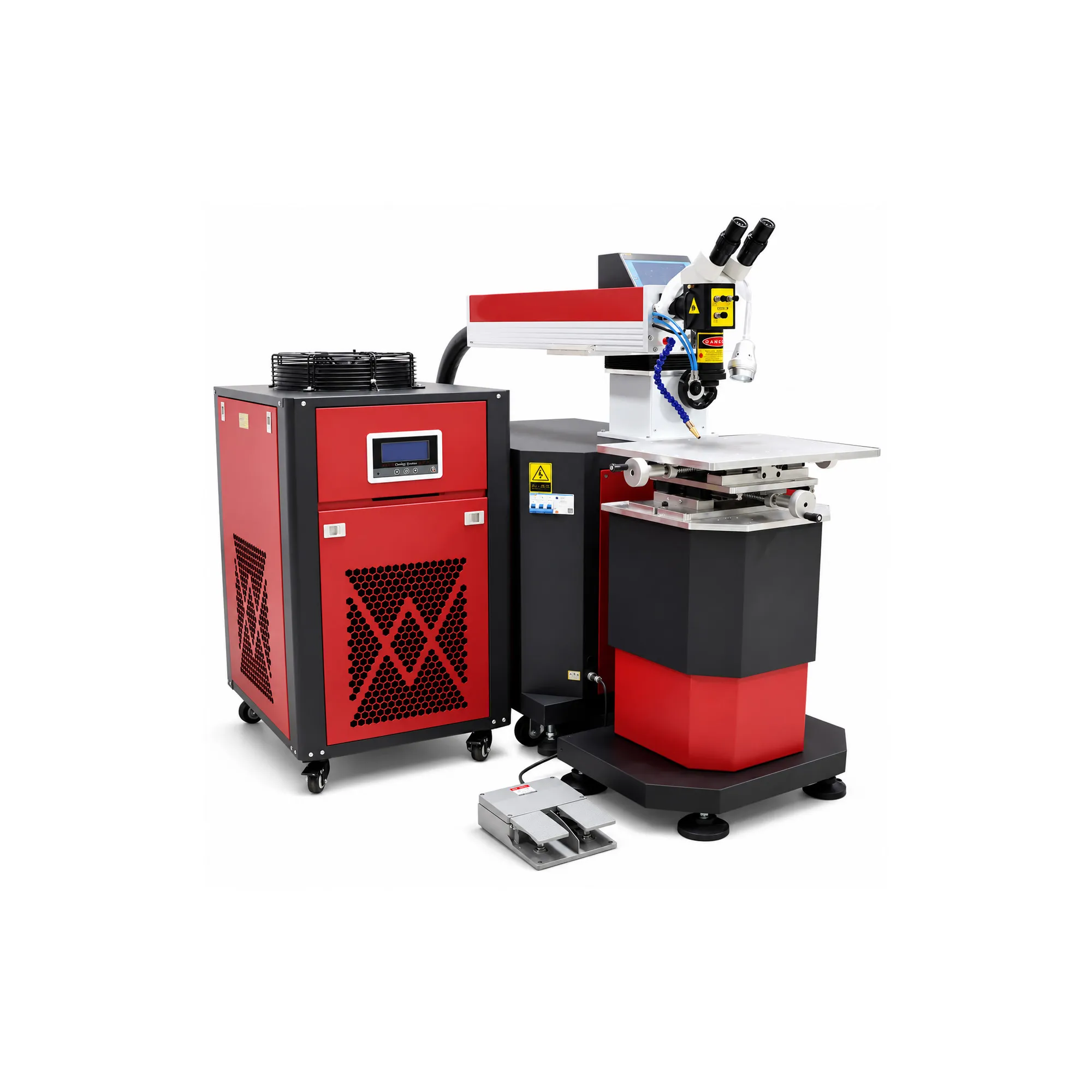
Review repair location, base/filler material and the required final surface.
Discuss mould repairSend your material pair, drawing and representative parts for an application review.
Prepare welding requirementsSend the joint, material grades, thickness pair and fit-up variation. Include access, required quality, inspection and the production route.
Prepare and review your requirements summary, then send it through the STR contact page or email. This form does not submit an inquiry.
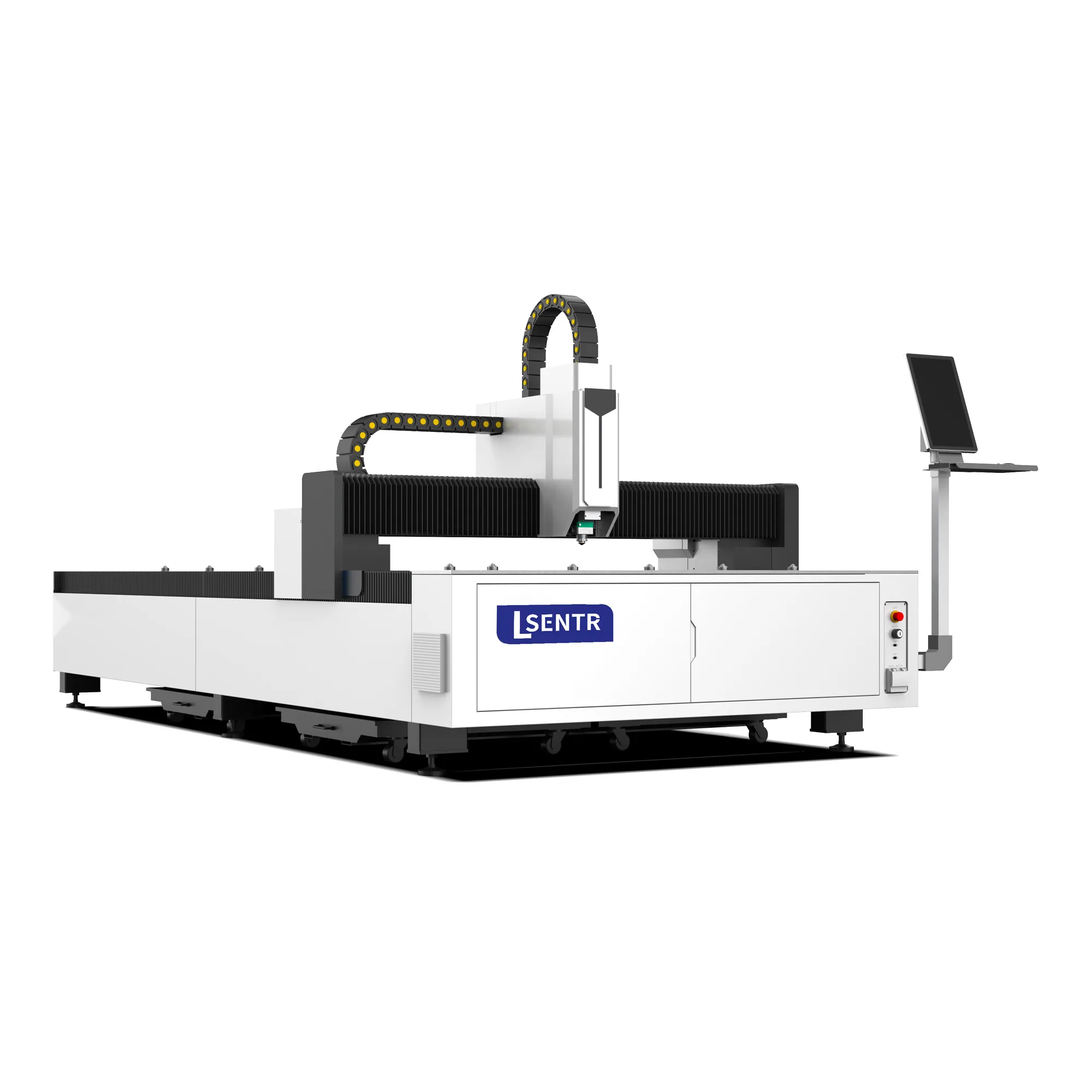
Discuss your application with STR. We supply industrial laser cutting, welding, cleaning and press brake equipment for metal fabrication.
Tell STR what you need to cut. We will review the application and discuss a suitable configuration.