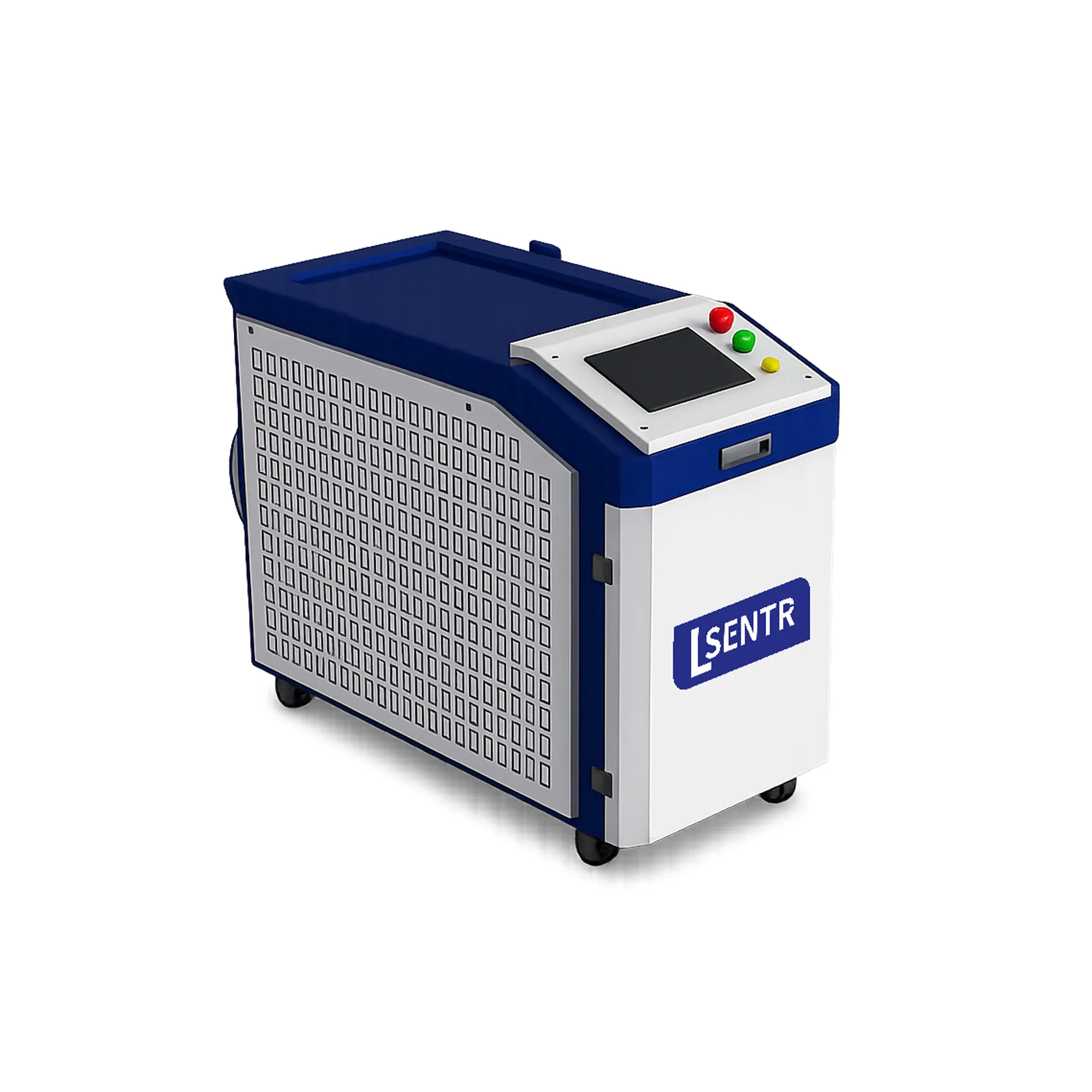
Continuous-Wave Cleaning
Review accepted removal and substrate response for the actual layer and exposure.
Discuss continuous cleaning
STR portable pulse cleaning · Define what to remove and what must remain.
STR lists Backpack 100W in its pulse laser cleaning range. Review the unwanted layer, substrate, accessible area and required surface condition, then match the portable equipment, power supply, extraction and protective work area to the job. Qualify the result on representative samples.
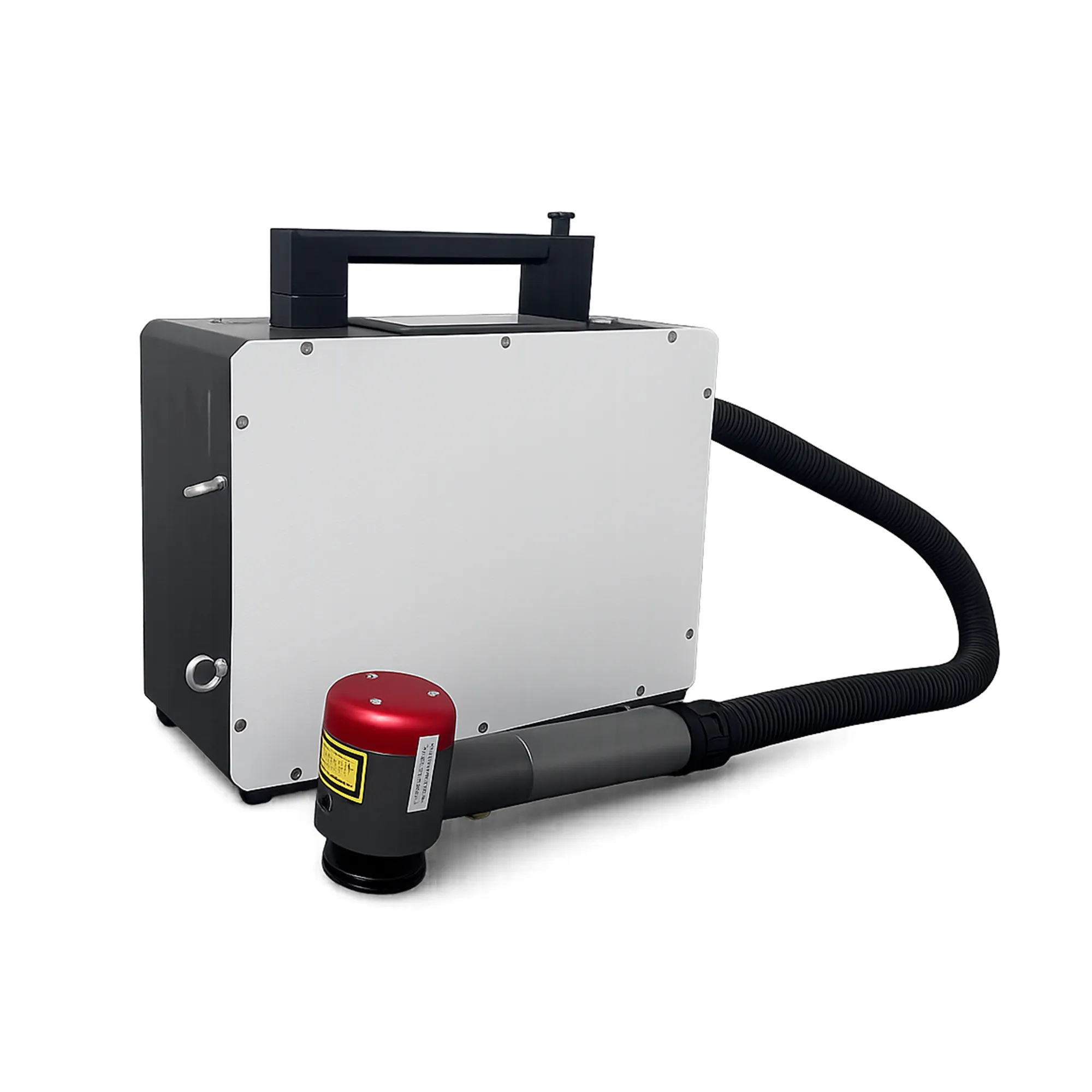
Original STR compact-unit image with labeled same-source details. Confirm the carrying, supply and handpiece package; no battery or operating demonstration is shown.
Configure selective surface removal around a measured endpoint.
Identify the base material, coating or deposit, area and access. State whether the surface is for inspection, recoating, bonding or another defined requirement.
A portable pulse cleaner must suit both the layer to remove and the surface to retain. The same-looking rust or paint can differ in thickness, adhesion and composition, while the base material and next operation may allow different surface changes.
Define the treated region, boundaries and access. Review a representative surface rather than assuming that an easy flat patch represents edges, pits or a curved component.
Agree the required cleanliness, profile or surface condition with the coating, bonding or inspection process owner. A bright appearance alone is not an acceptance specification.
Include power, extraction, cables, protection and setup/relocation time. A portable source is one part of the complete cleaning arrangement.
Record the base, removable layer and any sensitive features.
Define removal, retained surface and the next operation.
Use the offered source, handpiece, extraction and actual geometry.
Record surface results, time, interruptions and residue handling.
Request the exact Backpack model and technical sheet. The catalogue’s 100W label is a reference to confirm, not a cleaning-rate or runtime guarantee.
| Item | Definition required in the offer |
|---|---|
| Source and output | Source/model, rated-output definition, pulse energy/duration, repetition range, beam characteristics and duty conditions. |
| Scan and handpiece | Fitted head/optics, qualified scan field, working/focus range, control functions and replacement references. |
| Portability package | Complete carried/transported mass, carrying frame or harness if supplied, operating position, cables and permitted handling conditions. |
| Power and cooling | Input supply, cooling/environmental requirements and exact battery option if any; runtime only under defined conditions if supported by evidence. |
| Extraction and residue | Capture arrangement, filtration for the assessed contamination, included accessories and residue/filter handling responsibilities. |
| Qualified task | Substrate/layer conditions, geometry, endpoint, inspection and demonstrated accepted coverage/time. |
| Site and support | Protective equipment/interfaces, area control, manuals, training, maintenance, service and delivery scope. |
No verified machine weight, battery, runtime, scan width, removal speed, pulse envelope or environmental rating is established by the STR reference image. Confirm the ordered build before planning deployment.
Select the target to see the application evidence needed. These are evaluation tasks, not a qualified STR material list or operating recipe.
Provide the base grade, corrosion condition, thickness/coverage and any pits or existing surface loss.
Unknown coatings, plated surfaces, thin sections, polished/textured finishes, nonmetallic materials and heritage objects require separate specialist assessment and sample qualification. The backpack label does not establish suitability for these surfaces.
A pulsed source delivers energy in individual pulses while the handpiece presents it over the surface. The result depends on the layer and substrate as well as pulse characteristics, focus, scan pattern, overlap and exposure history.
| Quantity / condition | What to clarify |
|---|---|
| Average output and pulse energy | Confirm both quantities and their definitions for the actual source; the wattage label alone cannot describe the energy delivered in each pulse. |
| Duration and repetition | Obtain available pulse functions and their qualified combinations. Do not assume that every maximum value is simultaneously usable. |
| Spot, focus and scan | Define the fitted optics, usable working range and scan field with the real geometry, including curved or recessed surfaces. |
| Overlap and repeated exposure | Review the demonstrated process and inspection endpoint, including regions that may receive more exposure during manual work. |
| Substrate response | Agree allowed appearance, roughness, dimensional or other changes and inspect representative samples after treatment. |
Industry principle: IPG’s laser-cleaning explanation describes material-dependent removal thresholds and the need to tune pulse/spot conditions to avoid substrate damage. This is process background, not an STR test or a universal no-damage guarantee.
Identify chemistry, thickness, adhesion and multiple layers where known. Provide relevant coating/material information for assessment of the process and removed matter.
Record wall/section, finish, texture and allowable change. Include edges, corners or features that may respond differently from a broad flat sample.
Show the real geometry and the areas that must be treated. Line-of-sight, focus and extraction access require review; a wide scan label does not prove complete coverage.
Specify coating adhesion, bonding, welding, inspection or another required outcome. Removal of a visible layer does not automatically prove oil/salt removal, an accepted profile or downstream performance.
List everything that must move with the source: handpiece, delivery cable, input supply, extraction, protection and accessories. Confirm whether the ordered unit is carried while operating or positioned nearby, and whether a carrying frame or harness is included.
The photograph shows a compact case and handle. It does not demonstrate wearing the unit, cordless use, battery operation or a permissible work-at-height arrangement.
Confirm the actual supply, connection and cooling/ambient limits. Do not plan a remote task around assumed battery power or runtime.
Review usable delivery length, bending/handling requirements, handpiece access and cable management from the actual manual and layout.
Request complete equipment mass and ergonomics information. Include relocation, setup, inspection and breaks appropriate to the working arrangement.
Confirm permitted conditions for the actual equipment and site. Outdoor, confined, elevated or other constrained work needs its own access and protective assessment.
Format reference: cleanLASER’s backpack product page specifies its own carrying and power system. This illustrates why these details must be defined separately; its battery, mass, output and runtime do not describe STR equipment.
Laser cleaning removes material from the surface; the resulting fumes, particles and residues still need assessment and capture. Identify the layer before selecting extraction and filter handling, especially where coatings or deposits are unknown or potentially hazardous.
Review source capture with the handpiece and workpiece geometry. Confirm whether extraction is integrated, separately supplied or the site’s responsibility.
Select suitable filtration and handling from the assessed contamination and site requirements. A process without abrasive media is not proof of no waste or no exposure.
Plan a controlled laser work area, appropriate shielding/access controls and rated protective equipment with competent personnel. Include reflections, scan direction and surrounding access in the assessment.
Agree electrical/environmental protection, fire precautions, extraction operation and approved procedures for the ordered system. Do not infer a protective function from the pictured housing.
| Reference | What it identifies | Review separately |
|---|---|---|
| Backpack pulse cleaning | Portable-format pulse reference in the STR menu. | Actual carrying/power package, pulse/scan conditions, endpoint, captured residues and accepted coverage. |
| Trolley pulse cleaning | Another pulse-cleaning equipment format in the STR range. | Mobility, source/duty, cooling, accessories and site setup; a trolley label does not establish a different cleaning result. |
| Continuous-wave cleaning | A different output mode in the STR cleaning range. | Heat input/exposure and substrate response for the actual task, alongside removal and throughput. |
| Existing cleaning route | The current method and its accepted result. | Access, preparation, setup, waste/capture, inspection and downstream acceptance under equal boundaries. |
Pulse operation does not automatically make every substrate damage-free, and a higher wattage label does not establish faster accepted cleaning. Compare representative results and complete work time rather than relying on format or output mode alone.
Define the substrate, unwanted layer, target area, treatment boundary and endpoint before the trial. Keep the actual source, optics, handpiece, extraction and demonstrated process traceable.
| Check | Evidence to retain |
|---|---|
| Incoming sample | Base grade/condition, layer composition/thickness, area and representative variation, edges or recesses. |
| Removal result | Agreed residual-layer or cleanliness criterion and inspection method, rather than only a brighter before/after photograph. |
| Substrate condition | Permitted appearance, roughness, geometry, temperature-related effects or other specified changes, measured as needed. |
| Downstream requirement | Required coating/bonding/welding or other test where that is the task; visible cleaning alone does not prove it. |
| Site arrangement | Power, carrying/positioning, delivery reach, extraction, protective layout and remaining manual tasks. |
| Accepted coverage and time | Known area, endpoint, repeats, repositioning, setup, inspection, capture/filter tasks and interruptions under shared timing definitions. |
Record area and starting condition with the agreed endpoint and retained-surface inspection. An isolated pass, catalogue photograph or supplier-wide speed figure is not a measured STR result for your task.
Use the actual manual and BOM for protective windows, optics, nozzles or other fitted parts. Follow qualified cleaning/replacement procedures rather than assuming all heads share consumables.
Inspect and handle the cable, connectors and carrying equipment according to the supplied instructions. Confirm storage/transport and environmental limits.
Follow the fitted source/cooling maintenance plan. If a battery option is actually supplied, obtain its documented charging, storage, service and replacement requirements.
Maintain the assessed capture/filtration package and appropriate residue handling. Retain sample/process records and review changes to the substrate, layer, optics or endpoint.
The offer should list the source, pulse/scan specifications, handpiece, delivery cable, carrying equipment, supply/cooling, extraction, protective interfaces, consumables, documentation, training and representative acceptance trial. Identify exclusions and site responsibilities.
Agree packing, transport, commissioning, support, spare parts, warranty conditions and delivery schedule. Compare complete task costs including setup/relocation, accepted cleaning, inspection, residue capture, filters, energy and rework. No universal square-metre rate, maintenance saving or payback follows from the Backpack 100W label.
Have the substrate, layer and required endpoint?
Prepare a portable cleaning reviewIt is the catalogue reference shown in STR’s Pulse Laser Cleaning menu with the M15 image. Confirm the exact source, output definition, pulse/scan envelope and supplied portable package in the technical sheet.
Battery operation is not established by the STR reference. Confirm input supply and any battery option, including documented runtime conditions, charging and service, for the actual offer.
No universal guarantee is established. Qualify removal and retained-surface condition on the actual substrate/layer with the offered equipment and agreed inspection.
Use a timed representative trial with known area, layer condition and accepted endpoint. Include repeated passes, relocation, inspection and capture tasks; catalogue wattage alone is not a cleaning-rate measurement.
Define the required cleanliness and test method for the next operation. A visibly clean surface does not prove every contaminant has been removed.
Confirm the actual capture equipment, filtration, handpiece interfaces and handling responsibilities from the assessed layer and the itemized offer.
Review the actual environment, access, substrate and protection requirements. Portable format does not establish an outdoor rating or suitability for stone, heritage, thin or sensitive surfaces.
Send substrate/grade, layer details and photographs, thickness/coverage, geometry/access, required endpoint, area/workload, next operation, power/location conditions and extraction/site requirements.
Review each source and equipment format separately through the STR cleaning range.
Review accepted removal and substrate response for the actual layer and exposure.
Discuss continuous cleaningCompare a wheeled pulse configuration for source duty, cooling, movement and site support. A different format still needs the same substrate and endpoint trial.
Review trolley pulse optionsProvide the layer, retained substrate and required result for an application review.
Prepare cleaning requirementsSend the substrate, unwanted layer and required endpoint. Include area, geometry, location, power and extraction requirements.
Prepare and review your requirements summary, then send it through the STR contact page or email. This form does not submit an inquiry.
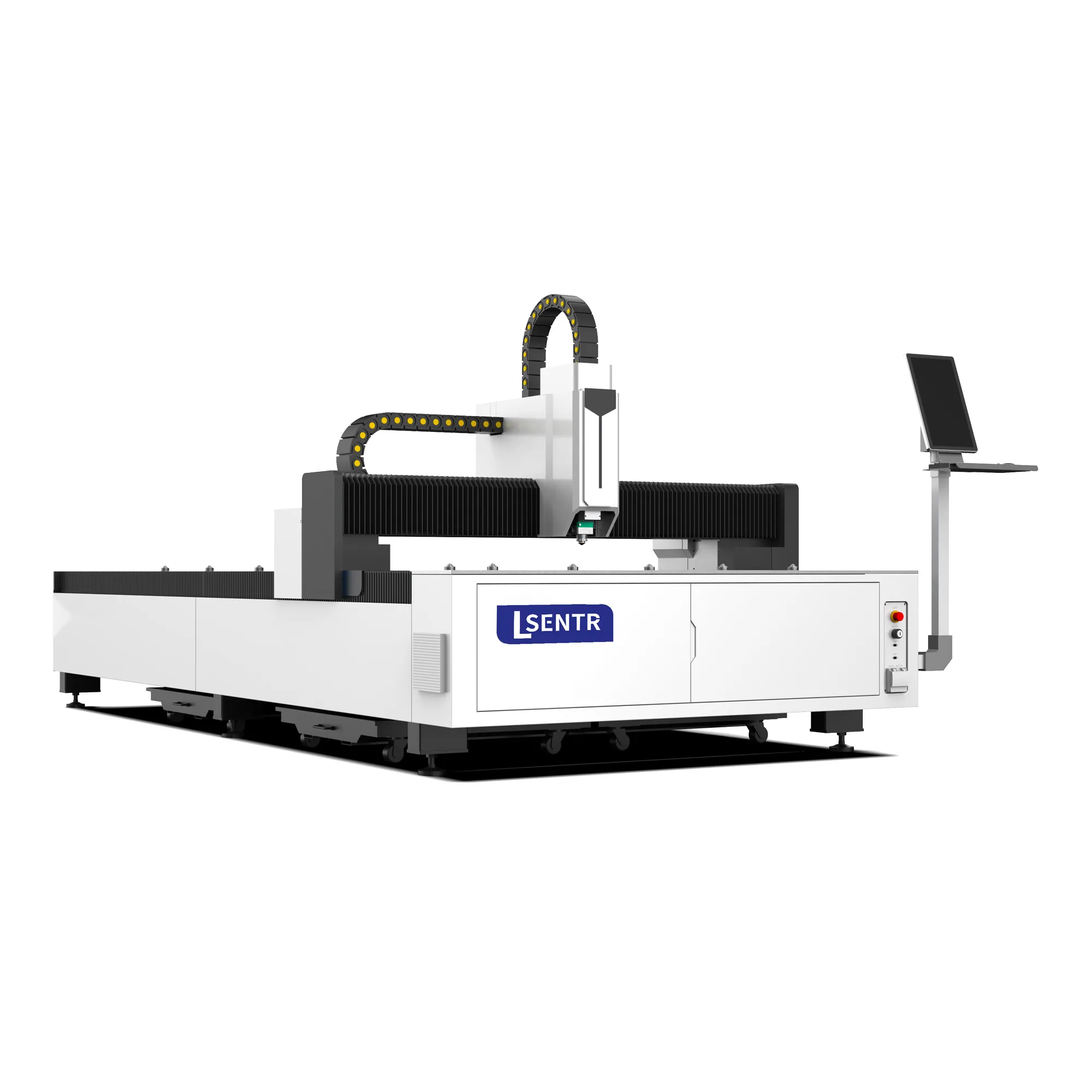
Discuss your application with STR. We supply industrial laser cutting, welding, cleaning and press brake equipment for metal fabrication.
Tell STR what you need to cut. We will review the application and discuss a suitable configuration.