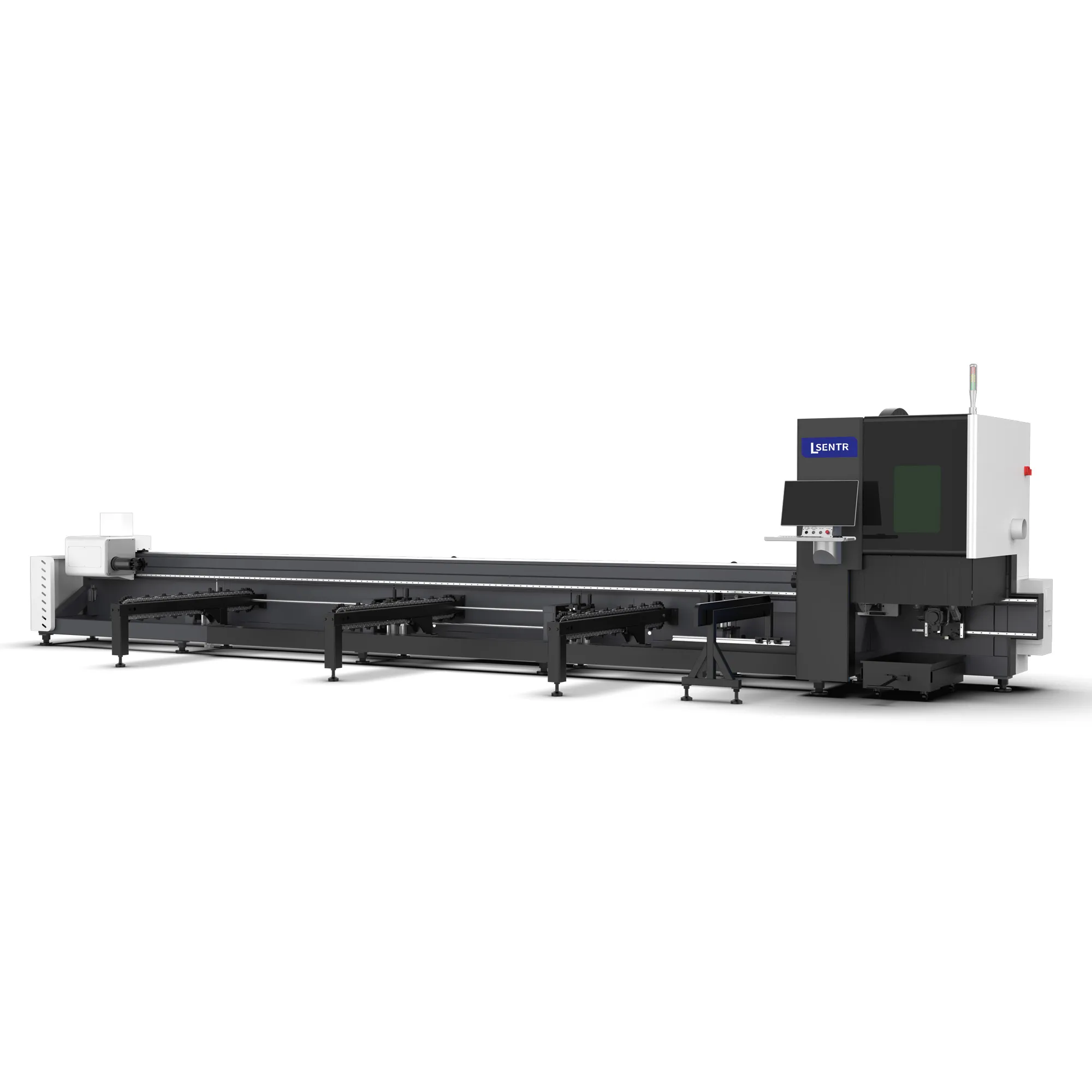
G-SA Semi-loading
Define assisted handling, operator tasks and the route for mixed batches.
Explore G-SA
STR G-A · Plan automatic feeding around the complete batch.
STR G-A is the automatic-loading configuration in the STR tube range, listed as Fully-Loading Type. Build the application review around your stock mix, repeated feeding, replenishment and section changes. Match the loading package to the cutting process and the route for finished parts.
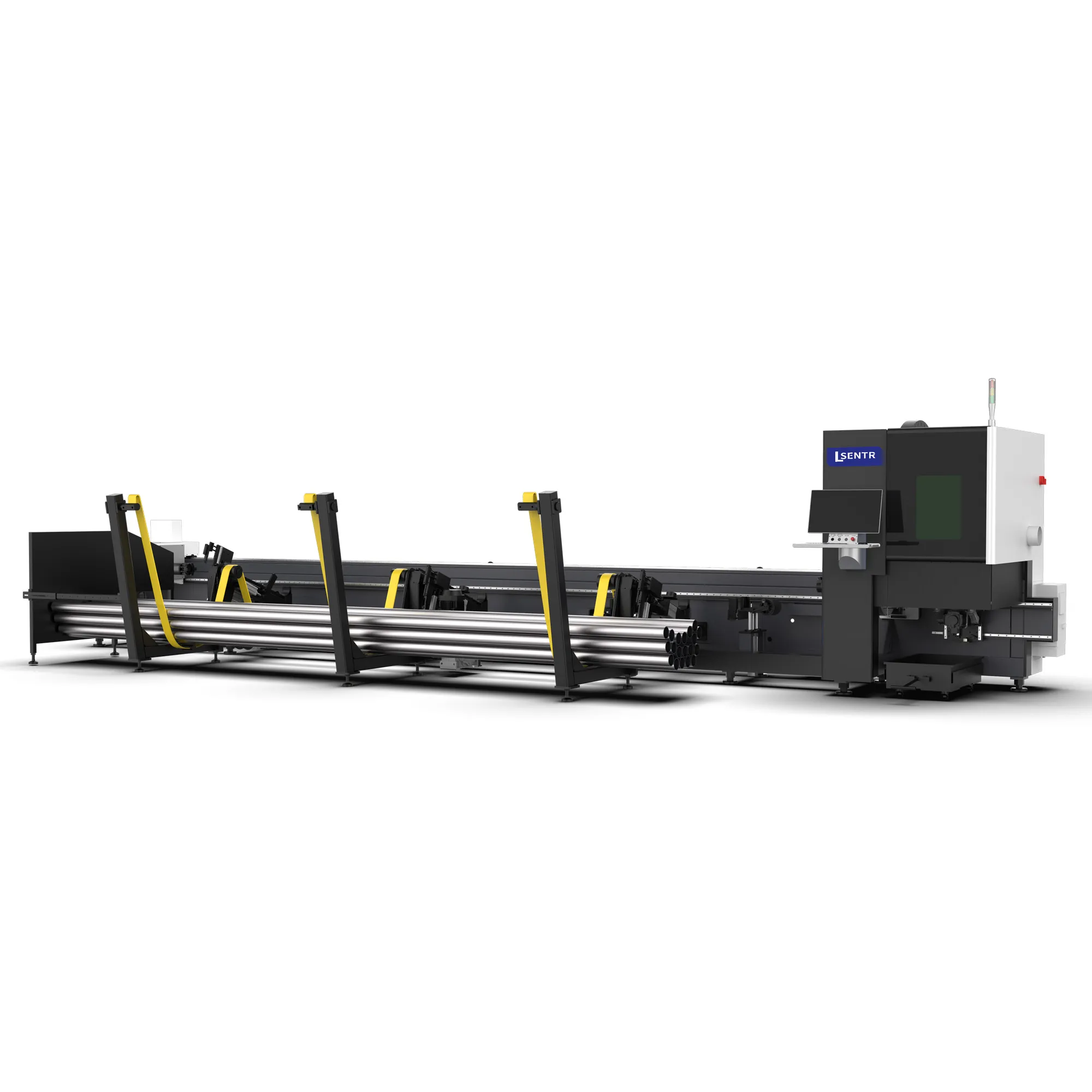
Original G-A catalogue rendering with labeled details from the same image. Confirm the supplied loading and recovery functions in the offer.
Configure feeding around your stock and production mix.
Send the stock list, bar and part drawings, quantities per job and required collection method. Include frequent changes and the replenishment route.
Automatic loading brings the incoming-stock route into the machine selection. Its value depends on whether compatible bars are available when needed and whether cutting, collection and the next operation can keep up with the intended batch.
For repeated frame members, brackets or other drawn tube parts, review consecutive feeding, stable orientation and collection into identifiable batches. Suitability depends on the actual section and part drawing.
For short runs and frequent section changes, include clearing the previous stock, guides or tooling, program selection and the next accepted first part in the comparison.
The automatic-loading label describes the incoming side. Replenishment, unloading, sorting, inspection and abnormal-stock recovery need their own scope.
Identify grade, section, length and the allowed stock arrangement.
Confirm separation, positioning and checks in the offered sequence.
Qualify grip, support, cut quality and collection together.
Define remaining attention and restart conditions.
Request a G-A technical sheet, layout and itemized scope for the ordered revision. A loading limit, a chuck range and a cutting limit describe different constraints; the required stock must meet all of them.
| Item | Definition required in the offer |
|---|---|
| Model and layout | G-A revision, chuck/support arrangement, loading equipment, stock staging and recovery layout. |
| Qualified stock | Permitted section types, outside size, wall, bar length/mass, straightness and surface condition for the full route. |
| Queued stock and feeding | Usable stock arrangement, capacity by size/mass, separation and transfer functions, sensing and positioning checks. |
| Replenishment and changeover | Who reloads stock, required access, whether production must stop, setup/tooling changes and first-part checks. |
| Cutting configuration | Laser source/head, gas, jaws, supports, controls, nesting/programming licenses and quoted process options. |
| Part and scrap recovery | Supported part lengths/mass, separation support, collection, sorting and remnant disposal. |
| Site and acceptance | Utilities, protective arrangements, batch trial, documentation, training, service and delivery responsibilities. |
STR’s public catalogue confirms the G-A Fully-Loading Type identity and image. Numeric power, tube range, loading speed, buffer capacity and included sensing require G-A-specific confirmation.
For a proposed automatic feed route, identify how one bar is selected, transferred, located and gripped before the cutting program proceeds. Review any checks of stock presence, section or orientation, along with the documented response when a check fails.
The visible straps and staged tubes are catalogue-image details. They do not establish the fitted drives, sensors, usable capacity or complete operating sequence.
Select a pattern to see the application information to discuss. These are review scenarios, not verified G-A operating modes.
Confirm the permitted stock arrangement and observe consecutive feeds through replenishment, cutting and collection.
Industry context: BLM’s LT7 technical information discusses loading arrangements by batch size/section and describes unloading separately. This supports reviewing both scopes; LT7 equipment, performance and capacities are not G-A specifications.
| Stock or job feature | Why it matters in the application review |
|---|---|
| Round tubes | Review diameter, wall, length, mass and straightness with the proposed presentation and separation method. Record the acceptable incoming variation. |
| Square and rectangular sections | Include both outside dimensions, corner form and required face/seam orientation. Review how the stock sits and passes through guides, jaws and supports. |
| Open or asymmetric profiles | Provide full cross-sections for explicit separation, transfer contact, rotation and gripping review; do not infer compatibility from round-tube images. |
| Thin walls or cosmetic faces | Agree acceptable marks, scratches and deformation through staging, transfer, clamping and recovery. Include actual surface finish or film. |
| Mixed lots and residual stock | Define permitted length variation, grade identification, how unfinished stock is cleared and whether different sections may share a queue. |
These are selection inputs, not a qualified material/profile list. A bar that fits the jaws may still exceed a loading, rotating-clearance, support or recovery limit.
Group the expected jobs by section, length and quantity. Count setup and clearing time rather than assuming one automatic adjustment covers all stock.
Show datums, seam position, hole relationships and the downstream operation. Automatic seam recognition, material identification and job matching are individual functions to confirm.
A queue of compatible bars gives a planning interval before more stock is needed. It does not establish how long the complete system can operate without attention: collection, inspection, consumables or an interruption may require action earlier.
Assume 24 qualified bars are available and each complete bar takes 3 minutes to process. The arithmetic gives 72 minutes of stock coverage. Compare a shorter assumed bar interval below; these are invented planning values, not G-A capacity or cycle data.
At 3 minutes per bar, 24 bars represent 72 minutes of stock coverage before replenishment, under the stated assumptions.
Coverage = usable bars × complete bar interval. This simplified calculation assumes a constant job and no losses or stops. It excludes replenishment time, changeovers, inspection, part-bin clearance and fault recovery. It is not an unattended-runtime or output guarantee.
Use the actual layout to define lifting routes, stock identification and who replenishes the queue. Confirm whether replenishment interrupts production and how restart is authorized.
Record when the output collection needs clearing and when inspection or other tasks occur. A larger stock queue does not remove these constraints.
Specify grade, wall, surface and the next welding, coating or machining step. Qualify laser/head and gas with representative samples and agreed edge/inside-wall conditions.
Measure length, hole spacing, angular relationships and orientation from agreed datums. Include parts from different bars and later in the batch, not just the first setup piece.
Define jaw contact, support, rotating clearance and permitted surface marking. The G-A loading name does not establish chuck count, minimum tail or a particular transfer strategy.
Submit slots, end forms, joint features and bevel requirements on the drawing. Confirm the head and software scope rather than assuming automatic loading includes every cutting option.
Specify length, mass and acceptable handling. Review support at the final cut and during removal; incoming stock length is not an unloading-length rating.
Review collection of small components, separation by job and access for inspection. Identify how parts can be removed without mixing accepted and rejected pieces.
Agree gripping reserve and offcut measurement for the actual nest. Define disposal or identification of reusable remnants; automatic loading does not prove zero-tail cutting.
Request the supplied recovery procedure and training for failed presentation, wrong stock or stopped jobs. Define who checks the stock/program match before restart.
| Reference | Primary selection question | Review separately |
|---|---|---|
| G-A automatic-loading | Which repeated feeding tasks are in the automatic sequence? | Compatible stock, queued capacity, replenishment, changes and remaining attention. |
| G-SA semi-loading | Which handling tasks are assisted and which remain with the operator? | Complete-cycle time, batch mix, section changes and recovery. |
| GT three-chuck | How does the gripping/support arrangement fit the part and transfer? | Loader scope, stock envelope and recovery; chuck count is not an automation level. |
| G two-chuck | Does the proposed gripping and support route meet the drawing? | Actual loading method, support and part recovery for the offered build. |
Compare the same stock list and accepted-part criteria. Review alternatives through the STR tube family; do not assume the loader can be retrofitted to another model without a compatibility proposal.
Agree the stock, drawings, configuration revision and pass criteria before the trial. Keep the exact jaws, guides, supports, laser/head, gas, software and remaining manual actions in the test record.
| Trial | Evidence to keep |
|---|---|
| Queued-stock preparation | Incoming lot, actual stock condition, usable queued quantity/mass and replenishment method. |
| Consecutive feeds | Presentation and grip confirmation, contact marks, feed interruptions, corrections and accepted bars over the agreed run. |
| Quality through the batch | Identified samples from the first and later bars, drawing measurements, edges, orientation and surface condition. |
| Replenishment and section change | Clearing/setup tasks, timing definitions, operator actions and first accepted part after the change. |
| Part and scrap recovery | Longest and shortest required parts, separation support, collection/sorting and final remnant. |
| Documented interruption recovery | Demonstration under the supplier’s controlled procedure; recorded responsibility, stock/job checks and restart conditions. |
| Production comparison | Elapsed batch time, accepted quantity, rejected parts, stops, setup and operator attention measured separately. |
A video of one pre-positioned tube does not demonstrate queued feeding or replenishment. Link the trial to the actual configuration and measured samples. The catalogue rendering on this page is not a cut-quality or cycle-time test report.
Obtain the installed layout including queued bars, lifting/replenishment access and storage. Confirm floor and foundation requirements from the ordered build.
Allow for the longest part, collection bins, sorting, scrap and downstream transport. Keep the proposed operator and service access in the layout.
Confirm electrical supply, cooling, gas quality/delivery, extraction and any pneumatic supply for both the cutting machine and loading equipment.
Confirm supplied guarding/access controls and site responsibilities. Clarify any storage, robot or data interface separately; none is established by the catalogue label.
Use the ordered BOM and manual to identify contact surfaces, guides and drive components. Follow their inspection, cleaning, lubrication and replacement requirements.
For fitted sensors and positioning devices, retain approved settings and fault/recovery instructions. Do not bypass checks to continue a batch.
Review contact condition when marks or dimensional results change. Stock the specified nozzles, protective optics and relevant wear parts for the actual build.
Include replenishment, changeover, interrupted-job recovery, program backups and material identification in training. Confirm support channels and spare-part identification.
Use an itemized offer covering the G-A cutting machine, loading equipment, jaws/supports, recovery equipment, laser/head, software and site requirements. Record excluded interfaces and options, the representative batch trial and acceptance documentation.
Agree packing, transport, commissioning, training, manuals, spare parts, warranty conditions and delivery schedule in writing. Evaluate labor attention, gas, power, consumables, sorting, rework and material yield over the same workload. The automatic-loading name alone does not establish headcount savings or a payback period.
Have a stock list and a representative batch?
Prepare a G-A application reviewIt identifies the automatic-loading configuration in STR’s tube catalogue. The ordered technical sheet and scope define the actual feeding actions, stock envelope, controls and remaining operator responsibilities.
No. Confirm replenishment, collection, inspection, monitoring and interruption recovery. Queued stock coverage is only one planning input; it is not an unattended-runtime rating.
Loading and unloading are separate scopes. Ask for supported part lengths/mass, collection, sorting and offcut handling in the actual offer.
Do not assume mixed-stock recognition or automatic setup. Provide the intended section mix and confirm permitted stock arrangement, identification, changeover and first-part checks.
Use the qualified section, bar length, bar mass and permitted stock arrangement in the supplier’s specification. A nominal weight or an image of staged tubes is not a bar-count guarantee for every job.
Use the same stock, parts and batch sizes. List which actions each proposal performs and measure setup, replenishment, accepted output, recovery and remaining operator attention.
Neither follows from automatic loading. Confirm seam/orientation functions, chuck/support arrangement, nesting and actual end-of-bar sequence separately.
Send section and part drawings, grade/wall, bar and part lengths/mass, quantities per job, shift pattern, stock arrangement, replenishment route, recovery needs, site layout and destination.
Compare loading assistance and gripping arrangements using the same stock and part drawings.
Define assisted handling, operator tasks and the route for mixed batches.
Explore G-SA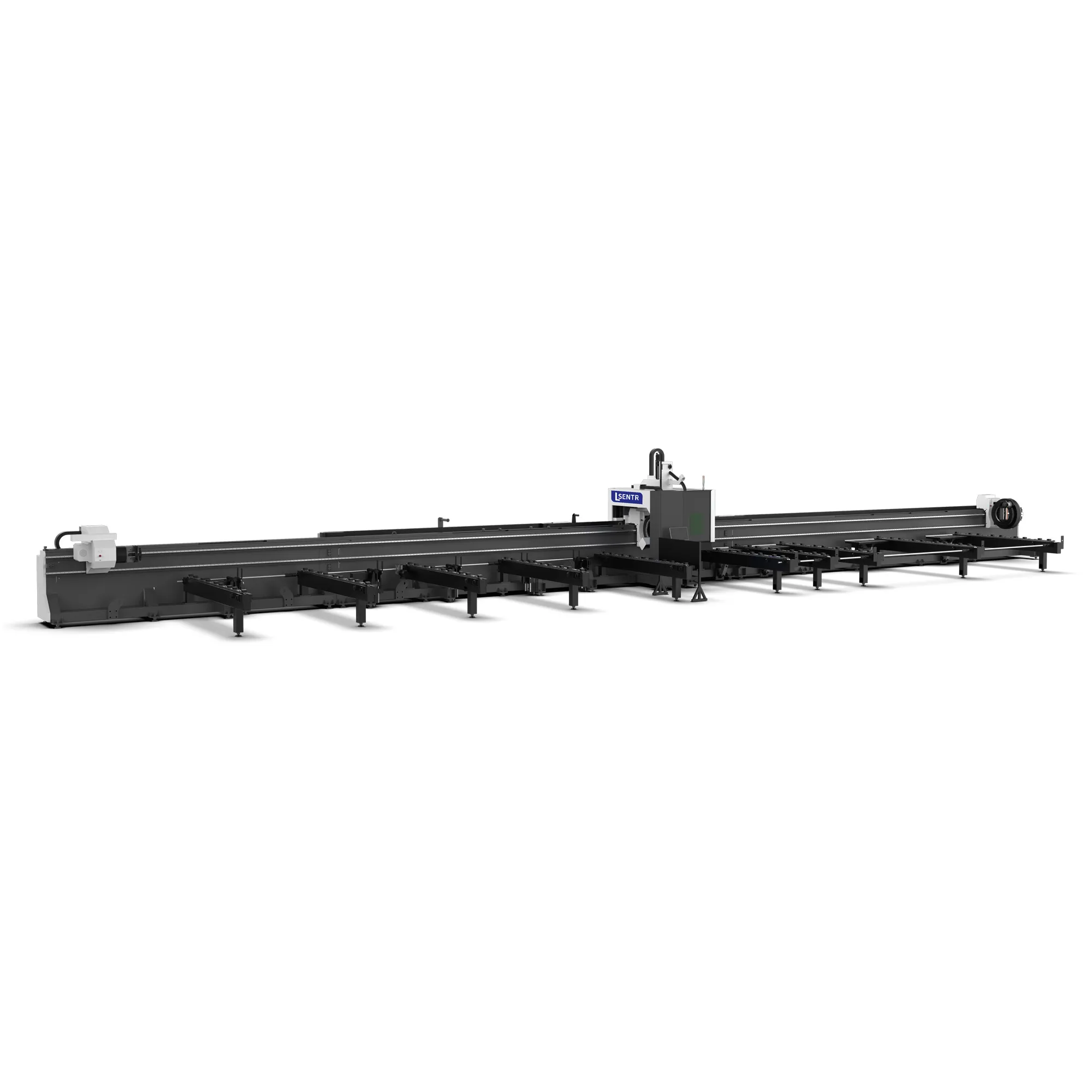
Review grip transfer and support independently of the loading package.
Explore GTDescribe recurring jobs, section changes and part recovery for a G-A configuration review.
Prepare G-A requirementsSend your tube mix, wall, stock/part lengths and mass, quantities per job and changes per shift. Include stock staging, replenishment and the required collection or sorting route.
Prepare and review your requirements summary, then send it through the STR contact page or email. This form does not submit an inquiry.
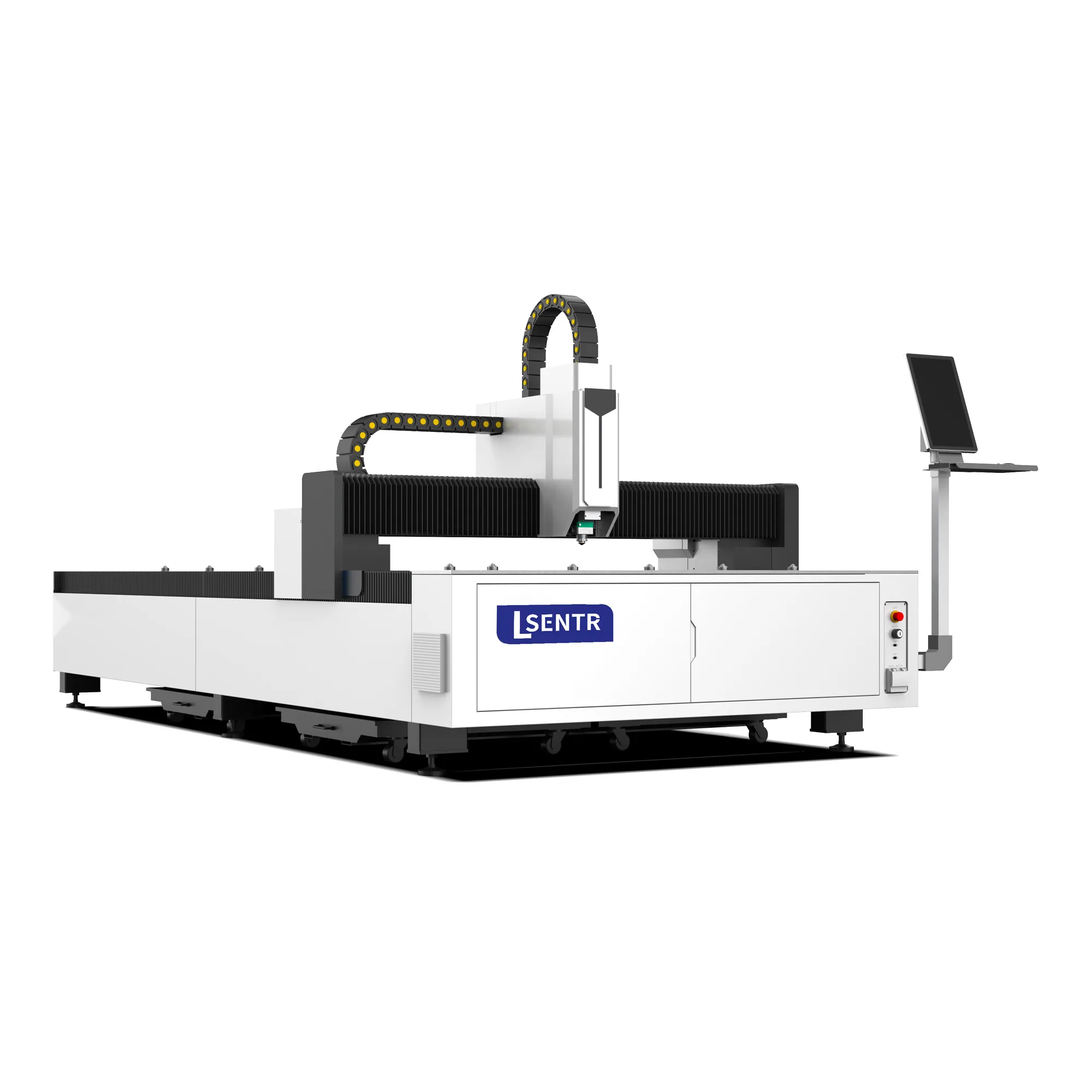
Discuss your application with STR. We supply industrial laser cutting, welding, cleaning and press brake equipment for metal fabrication.
Tell STR what you need to cut. We will review the application and discuss a suitable configuration.