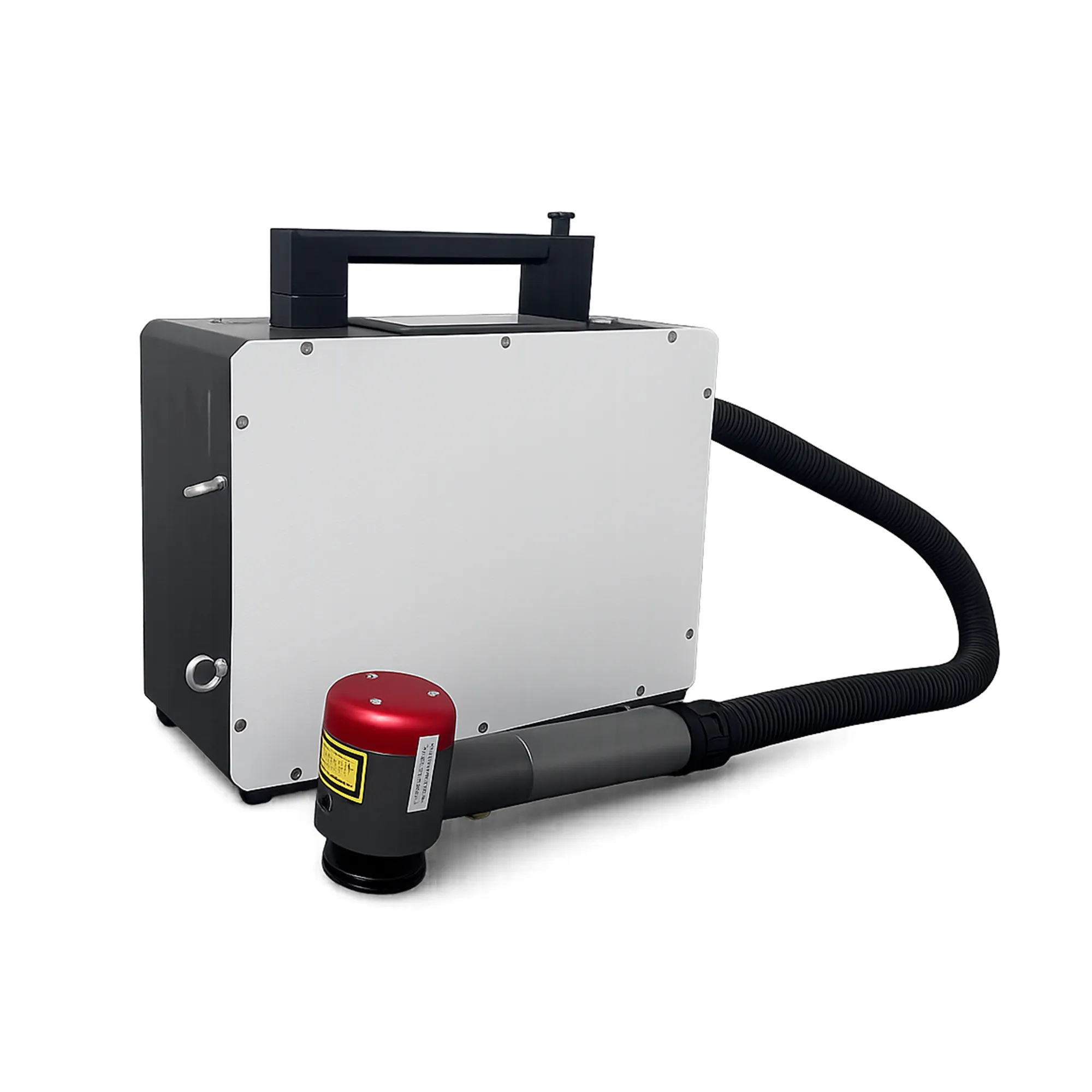
Backpack Pulse Cleaning
Review a portable arrangement against carrying, power, access and the same surface endpoint.
View backpack pulse cleaning
STR wheeled pulse cleaning · Plan the station around the accepted surface.
STR lists Trolley 200W in its pulse laser cleaning range. Review the substrate and removable layer, then configure the source, handpiece, cooling, extraction and station layout for representative batches or maintenance work. Establish surface acceptance and complete task time before choosing capacity.
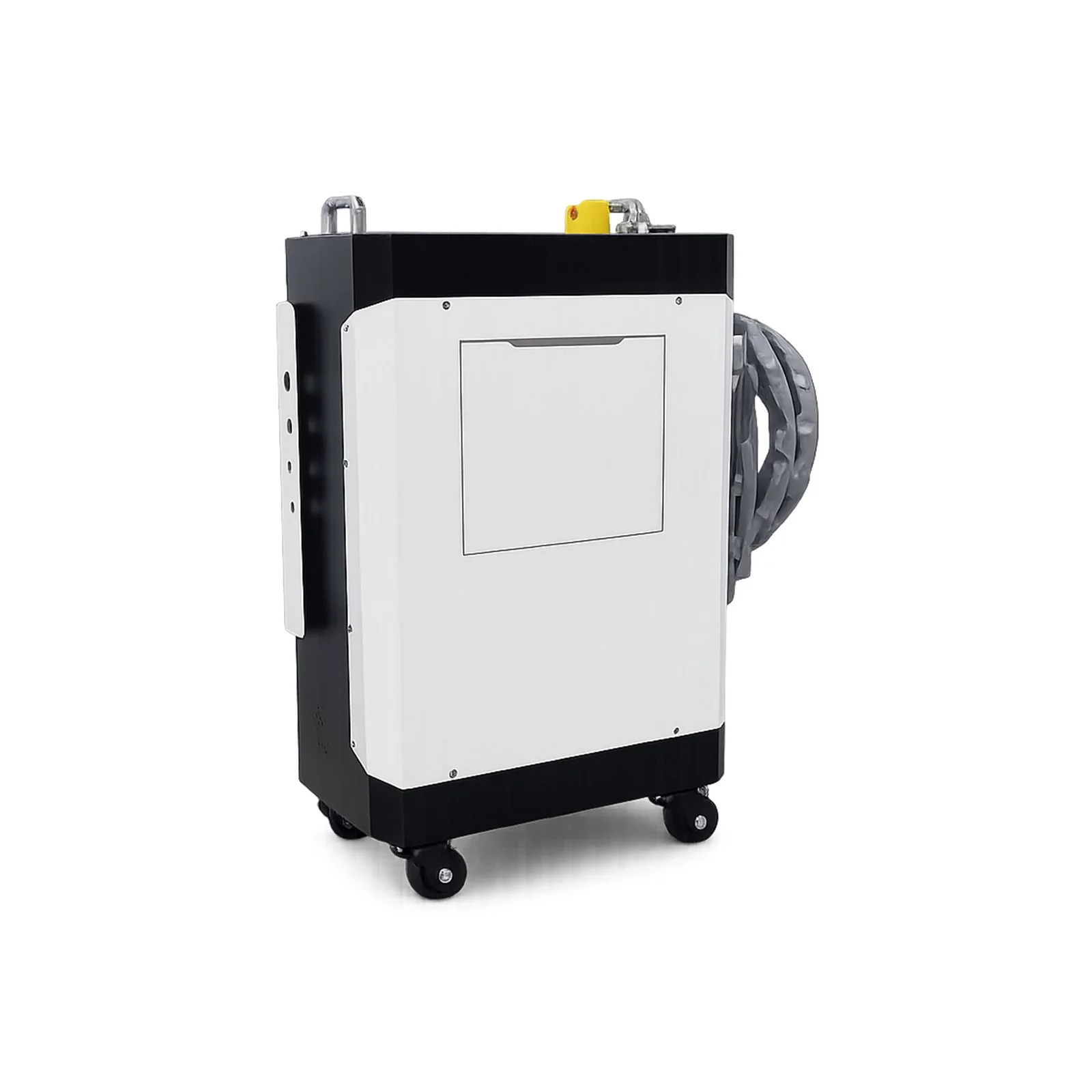
Original STR wheeled-cabinet image and labeled same-source details. Source, cooling, handpiece and extraction are specified separately in the offer.
Qualify surface removal and a repeatable workshop process together.
Include the layer, substrate, part geometry, batch quantity and required result. Describe how parts arrive, are positioned, inspected and passed to the next operation.
A trolley format lets the equipment be positioned near a defined work area. The useful production question is whether that arrangement can repeat the required removal while retaining the specified base-surface condition. Cabinet size and the wattage label do not establish the answer.
Consider part presentation, turning, small features and the inspection step. A repeatable part position can matter as much as a fast pass over one face.
Review access, reach, surrounding surfaces and the controlled work area. Include relocation and reinstatement in the job plan.
Ask for documented source, cooling and environmental conditions, then demonstrate the required work period. Wheels do not establish unlimited continuous duty.
Identify the layer, substrate and acceptance method.
Position parts, cabinet, cables, capture and protection.
Include geometry, layer variation and the planned duration.
Record handling, cleaning, inspection and interruptions.
Use the catalogue’s Trolley 200W label to identify the reference. Request the exact model and technical sheet; average output alone does not define pulse energy, removal rate or a qualified work period.
| Item | Definition required in the offer |
|---|---|
| Laser source | Make/model, rated-output definition, pulse energy and duration ranges, repetition range, beam characteristics and compatible operating envelope. |
| Handpiece and optics | Head/model, focal and working range, qualified scan field, control functions, delivery length and replacement optical references. |
| Duty and cooling | Permitted output/time cycle, cooling type and requirements, ambient limits, warm-up or recovery conditions and protective shutdown behavior. |
| Electrical supply | Input voltage/frequency/phase, rated demand and connection requirements for the source and all auxiliary equipment. |
| Trolley and handling | Complete operating mass, dimensions, service clearance, caster locks, floor limits, transport method and cable storage. |
| Extraction and residue | Capture location and airflow needs for the assessed layer, filtration, filter service, accessories and disposal responsibilities. |
| Controls and support | Supplied protective interfaces, manuals, training, process records, maintenance and acceptance/delivery scope. |
The photo does not verify a chiller, integrated extractor, battery, scan width, cleaning speed, operating weight or environmental rating. Confirm the supplied build and demonstrated process.
Select a pattern to organize the application information. These are planning questions, not automatic machine modes or a qualified material list.
Provide part drawings or photos, orientation, treated area per face, quantity and incoming layer variation.
For each pattern, identify what must be removed and retained. Corrosion removal cannot restore already lost material. Coating removal needs the full layer stack and relevant material information; preparation for recoating, bonding or welding needs the downstream acceptance test.
Pulsed laser cleaning applies energy in individual pulses while scanning distributes exposure over the surface. Layer absorption and thickness, base material, focus, pulse conditions, overlap and repeated passes all influence removal and surface change.
| Variable | Why it belongs in the trial |
|---|---|
| Average output and pulse energy | Equal average output can involve different pulse energy and repetition conditions. Request the permitted combinations for the actual source. |
| Spot and focus | Energy per treated spot changes with beam delivery and focus. Curves, recesses and handpiece position can produce a different result from an open flat coupon. |
| Scan field, overlap and travel | A wider displayed field is not itself a throughput gain. Review energy distribution, coverage and hand movement over the agreed area. |
| Exposure history | Repeated passes and boundary overlap can change accumulated exposure. Inspect transitions, thin regions and sensitive features as well as the main face. |
| Layer and substrate | Qualify coating/deposit variation and permitted surface change. A visually bright result does not prove salt, oil or other residual limits are met. |
No universal no-damage guarantee follows from pulse operation. Thin sections, precision finishes, plated or unknown coatings, nonmetallic and heritage surfaces require a separate application assessment rather than an assumed catalogue capability.
Provide a support or fixture appropriate to the actual part, orientation and cleaning boundary. Review turning, falling debris and access without extending beyond the qualified working arrangement.
Confirm a level compatible floor, parking/locking procedure, cooling clearances and service access from the manual. Do not treat casters as permission to move the machine during emission.
Plan delivery cable and extraction hose routes without strain, sharp bends or crossings. Confirm supported reach and handling rules; a visible cable coil does not establish cable length.
Assess the coating and residues, place extraction for the actual cleaning point, and define the controlled area, beam containment, reflection management and protective equipment for the supplied laser.
When moving between stations, include shutdown/parking, cable and hose handling, repositioning and re-establishing protection/capture. Do not assume integrated extraction, outdoor operation or self-contained power from the trolley format.
Define the longest typical cleaning period, output setting, pause pattern, ambient conditions and auxiliary load before reviewing duty. Confirm the source and cooling limits in writing, then observe the offered system over representative work.
Keep warm-up, protective interruptions, cooling recovery, optics checks and filter servicing in the record. A short demonstration on one patch does not verify a production shift. If batch mix or the layer changes, review whether the original settings and acceptance remain valid.
| Check | Evidence to retain |
|---|---|
| Incoming parts | Substrate/grade and condition, layer composition/thickness and adhesion, part geometry, treated area and representative batch variation. |
| Required removal | Residual layer, cleanliness or other agreed endpoint and the inspection method, with boundaries and difficult features identified. |
| Retained surface | Permitted changes in finish, roughness, dimensions or other relevant surface properties, measured where required. |
| Next operation | Coating, bonding, welding or inspection test when that is the purpose. Appearance alone is not downstream qualification. |
| Repeated work | Start/middle/end results for the agreed batch or work period, including edges, recesses, turning and zone transitions. |
| System traceability | Actual source, head/optics, delivery, scan/pulse configuration, cooling, extraction, environment and operator work method. |
| Complete time | Setup, handling, cleaning passes, repositioning, inspection, accepted quantity/area, rework, servicing and interruptions under a shared timing definition. |
Use the same substrate/layer, area definition and acceptance test when comparing suppliers or an existing process. Divide accepted area or quantity by the full recorded work time; a beam-on speed and a complete job rate are different measurements.
Use the fitted head’s manual and BOM for protective windows and other service parts. Follow the prescribed inspection/cleaning method and retain replacement references.
Maintain the actual air- or liquid-cooling package as specified. If liquid cooling is supplied, obtain coolant/water-quality, service and storage requirements rather than assuming them from the cabinet.
Check casters/locks, connectors and cable routing according to supplied instructions. Secure the system for transport using documented handling points and procedures.
Service the assessed filters and residue collection safely for the actual contamination. Review the qualified process after layer, optics, source or endpoint changes.
| Option | Selection question | Evidence required |
|---|---|---|
| Trolley pulse cleaning | Does this station fit the part flow and planned work period? | Surface trial, complete duty/cooling package, layout, handling and accepted batch time. |
| Backpack pulse cleaning | Does the job need a different portable arrangement? | Actual carrying/supply package, full deployed setup, reach and the same surface acceptance. |
| Continuous-wave cleaning | Does a different output mode suit the removal task? | Layer/substrate response, exposure and heat effects, accepted removal and full task time. |
| Existing cleaning process | What result and cost must the new route improve? | Equivalent accepted surface, setup, handling, waste/capture, downstream work and inspection. |
Do not equate higher wattage with faster accepted cleaning or compare pulse and continuous-wave systems on cabinet appearance alone. Review each offered configuration against the same part and result.
Ask for an itemized source and handpiece, optics, delivery cable, cooling and supply requirements, trolley specification, extraction, protective interfaces, consumables and spare parts. State which items are included, optional or the buyer’s responsibility.
Agree the sample/batch trial, manuals, commissioning, training, service arrangements, warranty conditions, packing, transport and delivery schedule. Compare cost per accepted part or area including handling, inspection, energy, capture/filter service and rework. No fixed removal rate, staffing saving or payback is established by the Trolley 200W label.
Have a typical batch or maintenance job to review?
Prepare the station requirementsIt is the reference shown in STR’s Pulse Laser Cleaning menu with the wheeled cabinet image. Confirm the exact source, output definition, pulse/scan envelope and complete supplied build in the offer.
No full-shift capability is established by the format or photo. Specify the work period, output, environment and pause pattern; confirm duty and cooling limits and demonstrate representative sustained work.
The photo does not establish either item. Request the actual cooling arrangement, capture/filtration package, required utilities and included accessories in the technical sheet and quotation.
Use representative area, layer condition, geometry and the agreed endpoint. Time handling, repeated passes, inspection and interruptions with cleaning; a wattage or scan-width label is not a measured job rate.
Different layers, substrates and acceptance limits need separate review. Use qualified conditions for the actual job and check whether variation or a change of coating requires a new trial.
Do not assume a universal damage-free result. Agree acceptable surface change and inspect the substrate as well as removal, including sensitive features and repeated exposure.
Confirm the delivery length, cable and hose handling, access, compatible floor and parking procedures. Each new work area still needs suitable capture and protective arrangements.
Send substrate and layer details, photographs, geometry/area, required endpoint and next operation, batch quantity/work period, station layout, available supply/environment and capture requirements.
Review a portable arrangement against carrying, power, access and the same surface endpoint.
View backpack pulse cleaning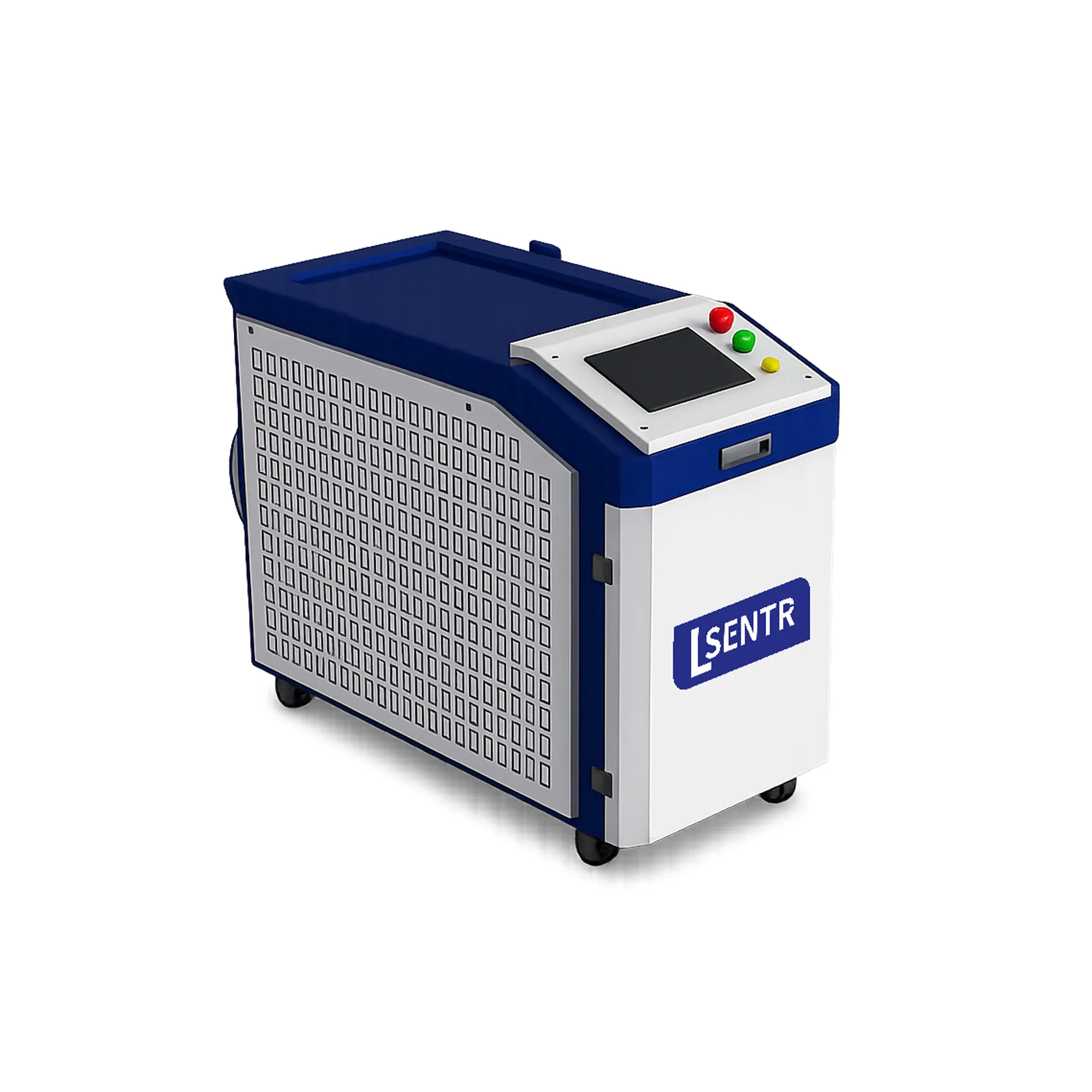
Compare removal, substrate response and complete task time under the offered output mode.
Discuss continuous cleaningSend the surface, part flow and acceptance requirement for a station review.
Prepare cleaning requirementsSend the substrate, unwanted layer and required endpoint. Include part flow, batch workload, station layout, utilities and extraction requirements.
Prepare and review your requirements summary, then send it through the STR contact page or email. This form does not submit an inquiry.
Discuss your application with STR. We supply industrial laser cutting, welding, cleaning and press brake equipment for metal fabrication.
Tell STR what you need to cut. We will review the application and discuss a suitable configuration.