Machinery plates and mounting parts
Submit base plates, mounting profiles and critical holes with their assembly or machining datums. Include handling and inspection after separation.

STR HD · Review plate support, covered access and the complete cutting route together.
The STR menu identifies HD as the heavy semi-enclosed series. Evaluate the proposed build around the plates and parts you need to support, the covered cutting arrangement, and how material enters and leaves the machine. Select the cutting package and acceptance conditions for that same job.
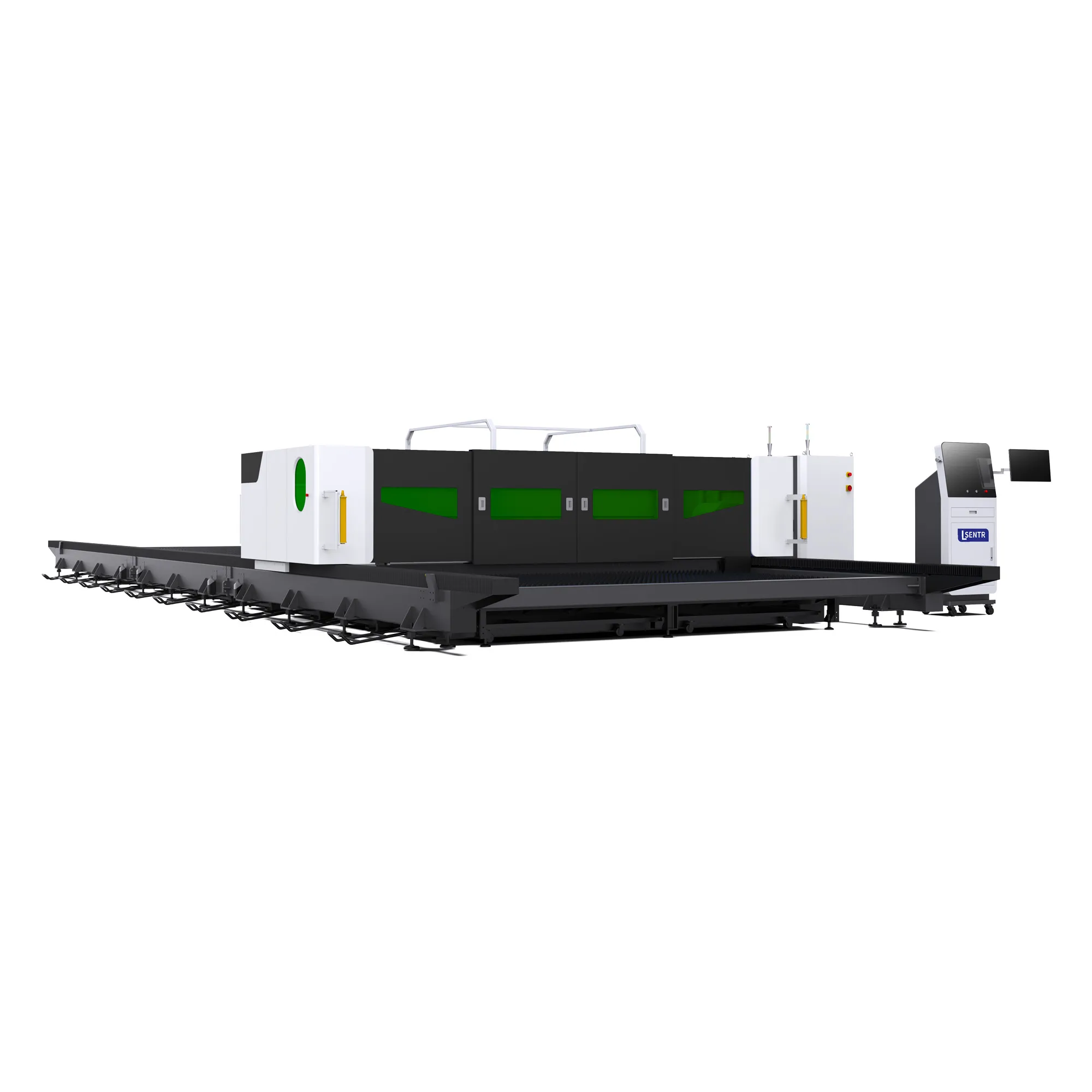
Original HD catalogue image and labeled detail crops. They are one image, not additional machine photographs or an acceptance report.
A heavy-series configuration review for plate support, access and process requirements.
Send blank dimensions, material grade, thickness and a representative drawing. Include the loading method, finished-part recovery and workshop layout.
A useful HD proposal connects the structure and support to the actual plate, then defines cutting access, the process and the accepted part. The series name is a starting point for that discussion; it is not a numerical load, thickness or precision rating.
Describe the usual and most demanding stock, its condition and how it will be placed. Confirm support and permitted loading with the selected build.
Review the actual covered region, openings and operating access. Coordinate them with loading, process observation, part removal and maintenance.
Use a representative drawing and material. Inspect the required geometry and edge after the agreed cutting, cooling, handling and finishing route.
Grade, size, thickness, condition and loading method.
Support, access, protective equipment and utilities.
Drawing, process conditions and inspection method.
Include recovery, cleanup, accepted output and service access.
Request the dated HD specification and layout for the exact offered machine. The public menu and catalogue image identify the series, but do not provide a verified HD capacity, load or accuracy table.
| Item | Required confirmation |
|---|---|
| Series / exact model | STR HD; record the exact ordered build and configuration revision. |
| Working envelope | Usable travel, permitted blank dimensions and restrictions near supports, covers or other obstructions. |
| Load and support | Permitted load distribution, local support, incoming stock condition and loading method. |
| Structure and installation | Actual construction, support/leveling conditions, foundation requirements and commissioning records. |
| Semi-enclosed arrangement | Covered region, openings, access controls, protective equipment and operating restrictions. |
| Laser and process | Source, head, control, gas and cooling matched to the agreed material and edge condition. |
| Quality acceptance | Drawing datums, geometry, cut surface, repeat samples and measurement conditions. |
| Supply and handover | Auxiliaries, software/licenses, documents, installation, training, spares and service scope. |
Source identity: STR's current menu labels HD “Heavy Semi-Enclosed Type,” reviewed 22 October 2026. Numeric capacity, drive type, speed, acceleration, accuracy and load require the HD-specific technical sheet.
Ask how the offered support, bed and installation arrangement suit the intended stock. The load path includes where the plate contacts the supports and how forces reach the machine and floor.
Construction materials, structural treatment, load limits and inspection records need technical evidence. The rendering does not establish a lifetime without deformation or a particular manufacturing method.
Provide actual dimensions and incoming condition. The same total mass can be supported differently depending on the stock shape and contact pattern; confirm the allowed case rather than assuming weight alone is enough.
Identify the proposed transfer and positioning method. Agree permissible loading with the machine supplier and the receiving workshop's handling plan.
Describe routine cutting, local heat and the expected operating pattern. Review support, debris collection and the relevant maintenance/inspection requirements.
Confirm the foundation, leveling, alignment and checking procedure for the selected build. Keep the commissioning and later service records tied to that machine.
The catalogue image shows a central housing with colored panels and open bed sections. It does not establish which parts move, the coverage during each operation, panel performance or access-control functions. Ask for the actual arrangement drawing and operating description.
| Question | What the proposal should identify |
|---|---|
| What region is covered? | Coverage and openings for the intended machine positions and operating modes. |
| How is access managed? | Included doors/panels, access controls, stopping/recovery functions and their documented operating restrictions. |
| How is the work observed? | The supplied observation arrangement and its documented specification; panel color alone is not a specification. |
| What happens around open areas? | The complete protective arrangement and responsibilities for the receiving installation. |
| How are fume and debris managed? | Extraction, collection, connection points and service access for the proposed material/process. |
| What changes for service? | Maintenance access and the supplied isolation, inspection and recovery procedures. |
Semi-enclosed is a layout description. Do not infer a laser class, certified protection level, complete enclosure or market approval from the image. Review the delivered equipment and installation documentation for the receiving site.
Map the route for the full blank, individual finished parts, remnants and the skeleton. Confirm access with the actual cover and machine positions rather than planning from the bare-bed dimensions.
Identify staging space, material/lot records, transfer access and support. Check the usable envelope and the required positioning clearances on the proposed layout.
Review the permitted operating access and the sequence used to keep the work supported. Do not assume an open area can be used for simultaneous loading while cutting elsewhere.
Include support and recovery of large, slender or awkward parts, followed by sorting and inspection. Account for permitted tabs and cleanup in the production route.
Plan skeleton/remnant removal and access to collection areas. Keep loading, scrap and service routes coordinated so one activity does not block the next.
Any independent zones, exchange-table behavior or automated loading must be explicitly included in the proposed configuration. The HD series label does not establish those functions.
Structure and enclosure do not select the laser power. Supply the material grade, usual and maximum thickness, stock condition, features and edge requirements, then review the source, head, gas, cooling and control together.
Identify compatible models, optics and operating conditions. Review the process range with a representative trial rather than relying on a source rating alone.
Compare the proposed gas route against the required surface, oxide/dross limits and downstream joining, coating or machining. Confirm the actual supply requirements.
Include pierces, lead-ins and transitions in the sample. Check how they influence nearby surfaces and controlled features, not only the middle of a long edge.
Review supported files, nesting, process functions, parameter records and recovery. State included licenses and operator training in the offer.
General process background: TRUMPF's laser-cutting explanation describes focus, gas, nozzle, power and feed as related process variables. It does not establish HD capacity or the supplied STR control functions.
For the power question, see the high-power A configuration discussion. For contour-dependent motion, compare AG. A requested bevel needs an AP application review or an explicitly confirmed bevel package; heavy-series construction does not imply one.
| Work material / requirement | Information for the application review |
|---|---|
| Carbon and structural steel | Grade, thickness, dimensions, scale/rust condition, edge acceptance and the next operation. |
| Stainless steel | Alloy, cosmetic/protected faces, stock handling and required cut-edge condition. |
| Aluminum alloys | Exact alloy/condition, flatness/support needs and required features; verify the laser/head package and trial result. |
| Other alloys or coated stock | Material information for an explicit process and extraction review. Steel samples do not establish suitability. |
| Heavy or uneven stock | Actual geometry, mass/support information and permissible loading conditions, independent of cutting capacity. |
“Heavy-duty” does not establish universal suitability for every material, thickness or plate condition. Match the delivered build and process to the stock used in daily production.
Agree what must be measured on the finished part. Overall size, squareness, hole position and edge condition answer different questions. Identify the reference edges, inspection method and relevant locations before the trial.
Check the dimensions and feature positions needed for fit. Include relevant top/bottom measurements when plate thickness and edge geometry affect acceptance.
Define cooling, handling and any temperature/conditioning procedure needed for the agreed tolerance. Keep the conditions consistent across compared samples.
Agree the number of parts, run conditions and relevant working-area locations. A single favorable coupon does not describe the complete production run.
Machine-axis checks and finished-part checks have different purposes. Request the applicable records rather than treating an axis repeatability figure as a universal part tolerance.
Choose a representative drawing and material, including the plate support and loading conditions. Record machine/build identity, source/head/control, software/settings, gas, stock condition and the inspection plan.
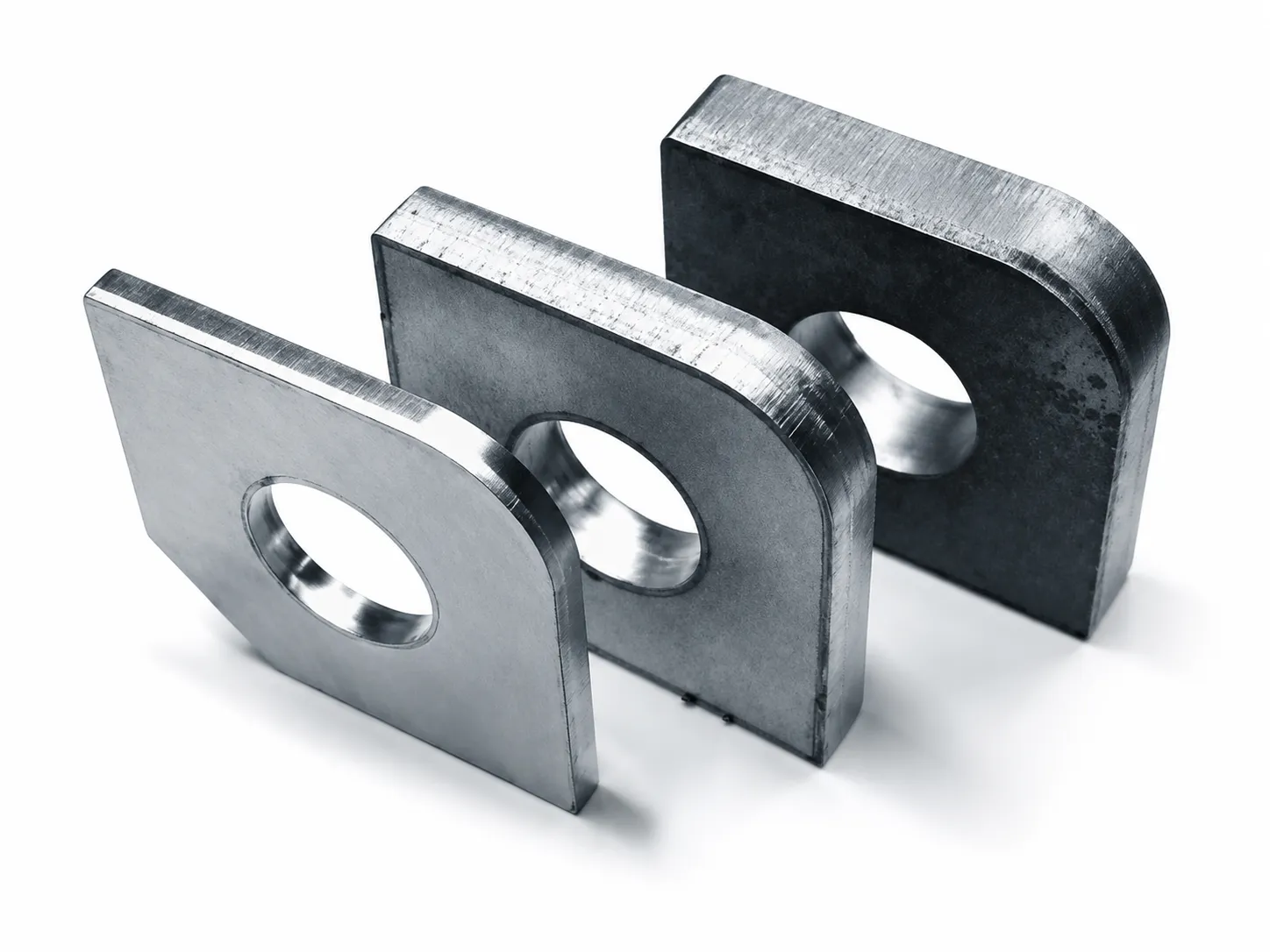
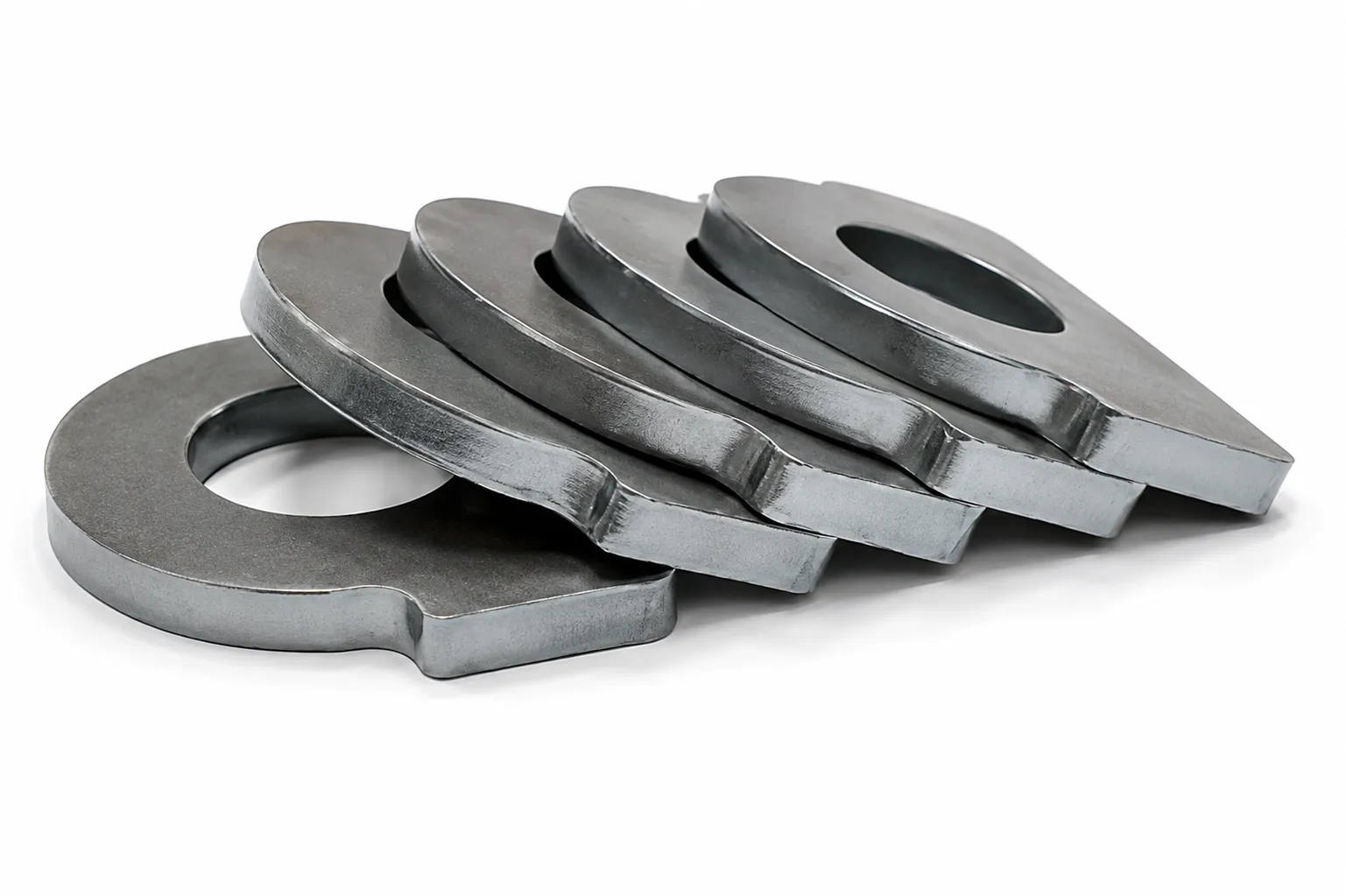
These library photographs illustrate sample presentation. They do not establish HD material grade, cut thickness, dimensional accuracy, source power or a passed production trial.
| Acceptance area | Record in the agreed trial |
|---|---|
| Plate and support | Stock identity, condition, support arrangement and the relevant permissible loading case. |
| Cutting result | Required dimensions, holes/slots, corners, starts and surface condition at agreed locations. |
| Edge preparation | Permitted dross/oxide removal, tabs, cleanup and requirements before the next operation. |
| Repeat run | Early/later samples, repeated dimensions, interruptions and any process changes. |
| Access and recovery | Demonstrated loading/removal and the agreed operation of supplied access features. |
| Complete batch | Accepted count plus setup, handling, cutting, cleaning, inspection and rework under the same timing scope. |
Keep sample labels and the report linked to the offered configuration. If the head, laser, gas or support arrangement changes, review whether the recorded result still represents the final proposal.
Submit base plates, mounting profiles and critical holes with their assembly or machining datums. Include handling and inspection after separation.
Review the normal grades, support, cutting duty and edge preparation for the next operation. Use recurring work to compare consistency and the full route.
Describe the actual mix instead of selecting only the most demanding plate. The proposed support, process and handling must suit routine jobs too.
Review the supplied partial-cover arrangement with the workshop layout and access needs. Confirm the actual equipment and responsibilities rather than selecting from the rendering alone.
Provide the workshop floor/layout, doors, columns and intended material route. Confirm installation loads, foundation/leveling, assembly and commissioning responsibilities.
Request input requirements for the source, machine and auxiliaries, including chiller and ambient conditions. Optical output is not the whole installation's electrical demand.
Confirm gas quality and delivery under load, extraction connections, collection and maintenance access for the selected process. Do not assume complete fume capture from the housing image.
Include cover/panel opening and service clearances in the full drawing. Keep access to optics, guides, collection and auxiliaries within the supplied maintenance procedure.
Keep material, drawing, accepted edge, output and commercial scope consistent while comparing the proposed arrangements. Ask which limitation each configuration resolves, and what the receiving workshop must add.
| Selection question | Relevant comparison |
|---|---|
| Need an open single-table route? | Review standard A access, normal stock and laser configuration. |
| Need a larger part envelope? | Compare BG large-format working envelope and complete material-handling route. |
| Need outside preparation and exchange? | Review the actual B or BD exchange arrangement and its permitted workflow. |
| Need HD support and covered arrangement? | Compare the HD-specific structure/load/access documents, process trial and installation scope. |
The catalogue names are not load, power, precision or protection ratings. Compare the exact offered configurations and their application evidence.
Have the stock, drawing and receiving layout ready?
Prepare an HD application reviewUse the actual equipment manual for isolation, inspection, cleaning, lubrication and recovery. A heavy-series description does not remove maintenance or establish a fixed consumable life.
Keep support condition, scrap collection and extraction paths within the supplied inspection/cleaning procedure. Include service access in the workshop plan.
Inspect the supplied panels, access features and relevant controls as instructed. Confirm replacement-part identification and service responsibilities.
Use the specified optics/nozzles and maintain gas/cooling conditions. Record contamination, damage or changing cut results with the service team.
Retain commissioning, calibration and service records, plus supported program/parameter backups. Confirm training and update/license scope in the proposal.
Align the technical sheet, dimensioned layout, trial report and dated commercial offer. List the exact machine, source/head/control, support/load definitions, protective arrangement, auxiliaries and software included.
Agree site preparation, transport/assembly, commissioning, application acceptance, training, manuals, spare-parts identification and service contacts. Set lead time, warranty, exclusions and any on-site work in the actual agreement.
This product preview does not establish a delivery date, warranty period, structural lifetime, certification or service-response guarantee.
It follows STR's menu identity for the heavy semi-enclosed series. Confirm the ordered model, structure, load, cover arrangement and process in the HD-specific offer; the letters alone are not a technical rating.
Request the actual drive arrangement, measurement conditions and acceptance records for the proposed HD build. The series name or catalogue image does not confirm a linear motor, a particular acceleration or a finished-part tolerance.
No such conclusion follows from the name or rendering. Confirm coverage, openings, access equipment and the supplied protective arrangement for the intended installation. Panel appearance is not a verified protection specification.
Request the permissible load distribution, support/loading conditions and usable envelope for the exact build. Provide real plate dimensions, material and condition; do not infer load from the image or borrow another series' rating.
No. Select source, head, gas and cooling around the material and edge requirements. Structural/support and laser-output choices are related configuration questions, not interchangeable specifications.
Only if the actual configuration, protective arrangement and documented method support that operation. Do not assume independent zones, exchange tables or automation from the semi-enclosed layout.
Use the buyer's drawing, datums, dimensions, features and measurement conditions. Combine relevant machine checks with repeated finished-part inspection; neither a single coupon nor an axis figure proves every production tolerance.
Send stock dimensions, grade/thickness, loading/support information, representative drawings, required edge and inspection, output, recovery method and workshop layout/utilities. Identify the covered-access requirements you need reviewed.
Review access and handling without transferring one series' specifications to another.
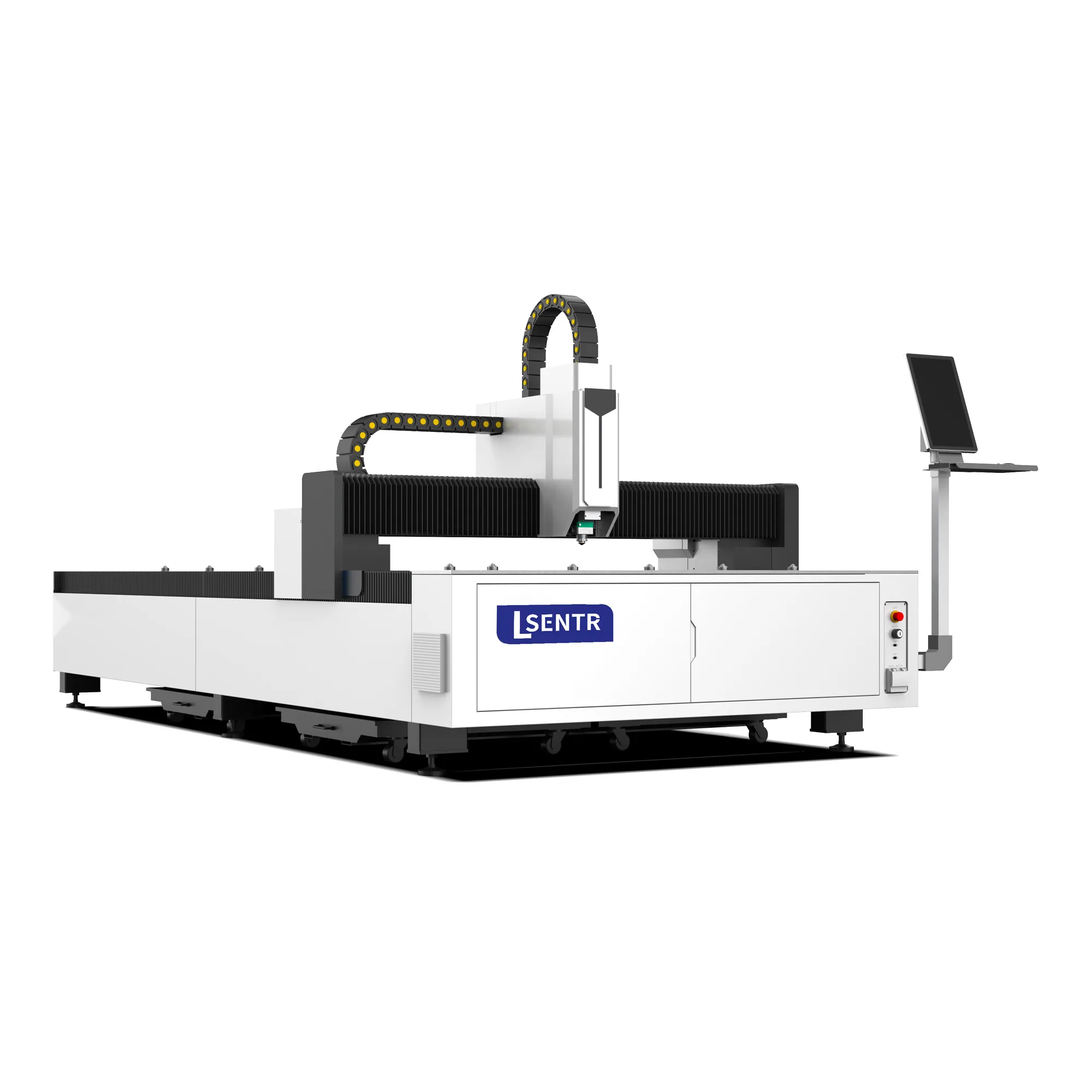
Review a standard open worktable and the normal material/configuration mix.
View standard A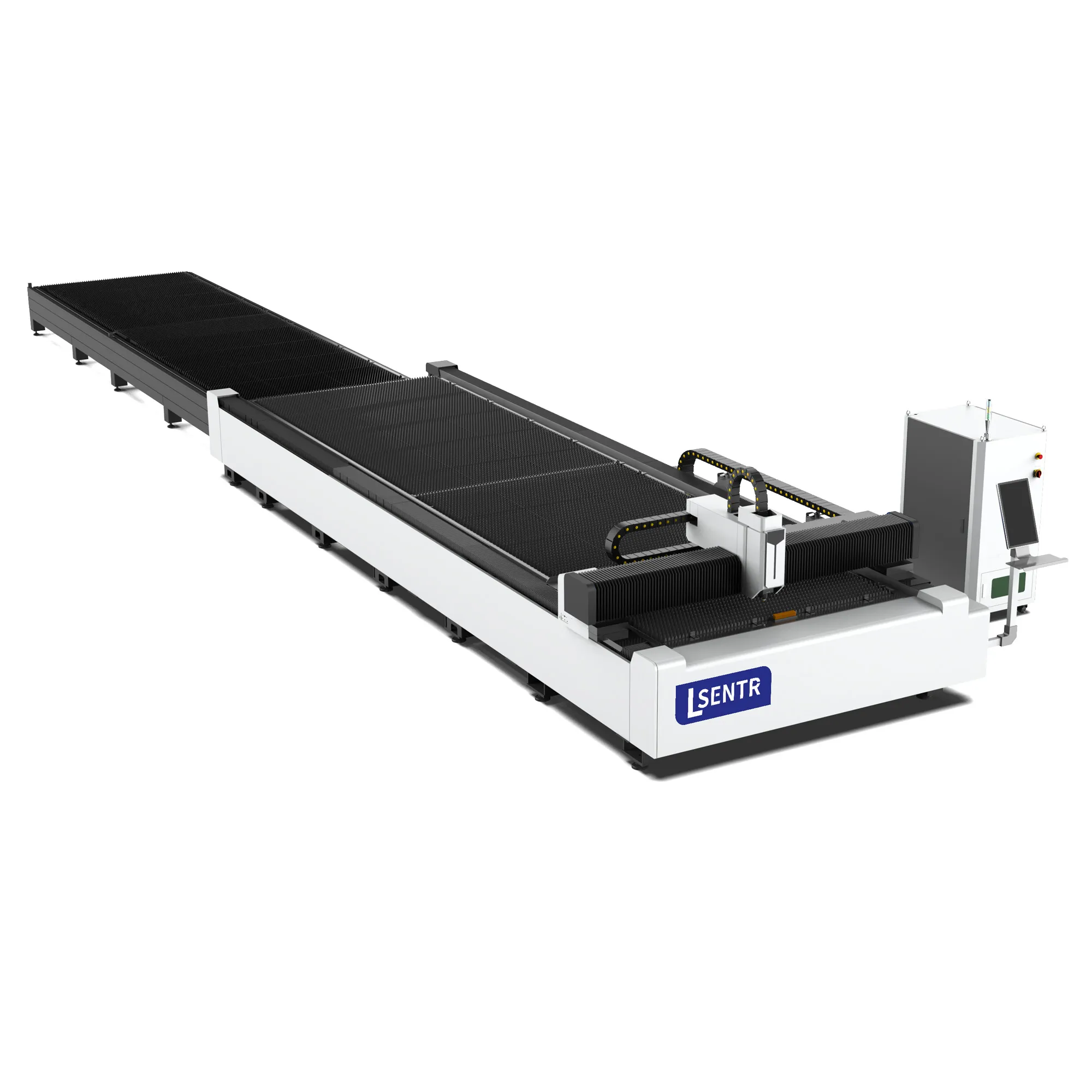
Compare outside preparation, exchange travel and the complete handling route.
View the B layout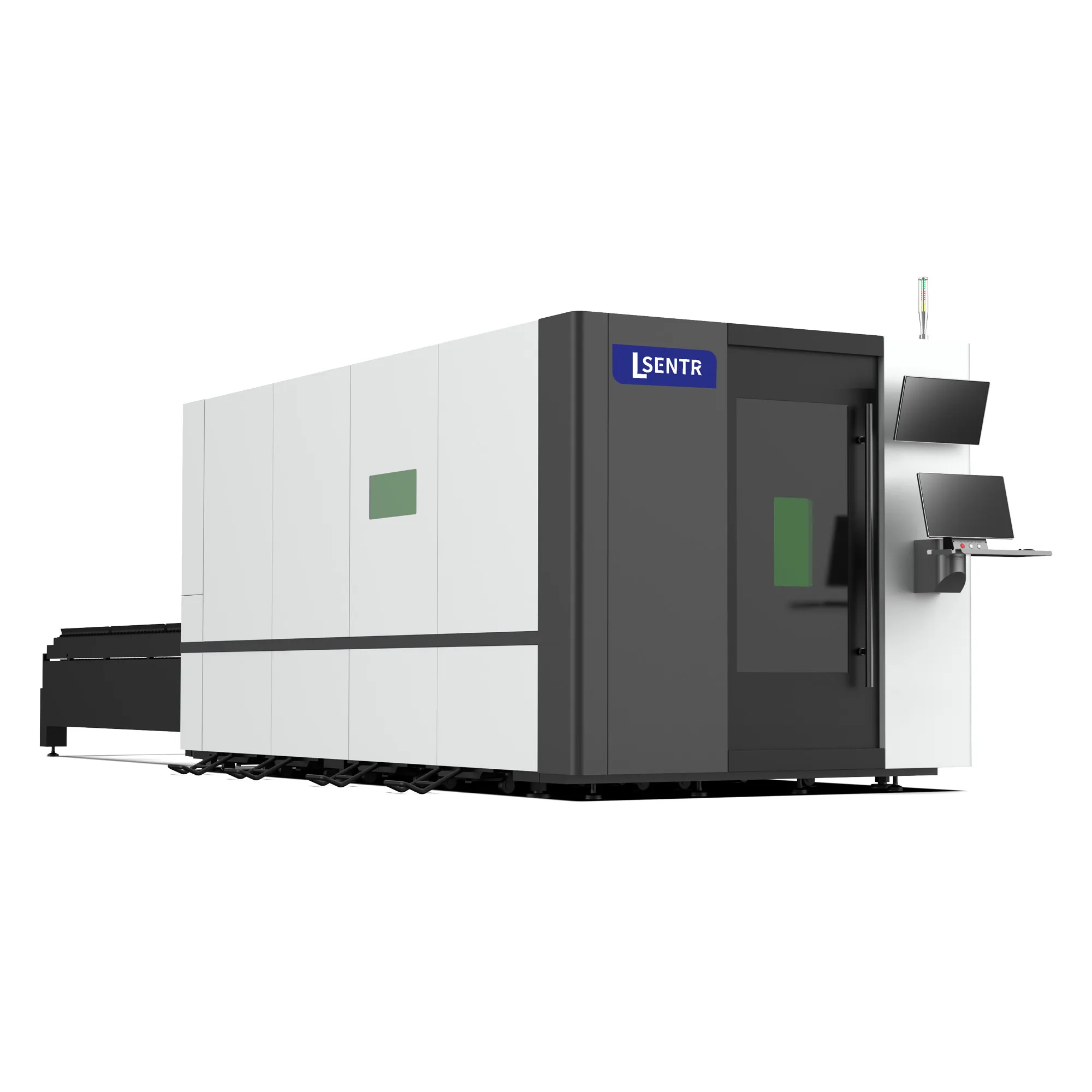
Review an enclosed cutting position, external handling and its supplied access package.
View the BD layoutSend stock dimensions, material and thickness, support/loading information and a representative drawing. Include required datums and edge condition, covered-access needs, recovery and workshop layout.
Prepare and review your requirements summary, then send it through the STR contact page or email. This form does not submit an inquiry.
Discuss your application with STR. We supply industrial laser cutting, welding, cleaning and press brake equipment for metal fabrication.
Tell STR what you need to cut. We will review the application and discuss a suitable configuration.